Welcome to the comprehensive guide on optimizing your sleep environment by addressing one of the most pervasive disruptions to restorative rest: ambient noise. Achieving deep, uninterrupted sleep is a foundational pillar of human health, cognitive function, and emotional resilience. Yet, in our increasingly urbanized and densely populated world, silence has become a rare commodity. Whether it is the rumble of traffic, the hum of household appliances, a snoring partner, or the sudden bark of a neighborhood dog, unwanted auditory stimuli can profoundly fragment your sleep architecture. In the pursuit of auditory tranquility, two primary interventions have emerged as the gold standards for sleep optimization: earplugs and white noise machines. These solutions operate on fundamentally different acoustic principles, yet both aim to insulate the sleeper from environmental disturbances. Earplugs function through passive attenuation, physically blocking sound waves from entering the ear canal and reaching the tympanic membrane. In contrast, white noise machines utilize the principle of sound masking, broadcasting a continuous, broadband auditory signal that raises the ambient noise floor and drowns out sudden acoustic peaks. Understanding the nuanced mechanics, distinct advantages, and specific limitations of each approach is essential for tailoring a sleep environment that meets your unique physiological and psychological needs. This extensive analysis looks closely at the science of sleep disruption, the physics of sound isolation, and the neurobiology of auditory masking. By comparing the efficacy, comfort, and practical applications of these two modalities, we aim to provide you with the critical insights necessary to make an informed decision. Furthermore, we will explore how strategic combinations of these tools can create an impenetrable fortress of silence, even in the most challenging auditory landscapes, ultimately empowering you to reclaim your nights and wake up fully restored.
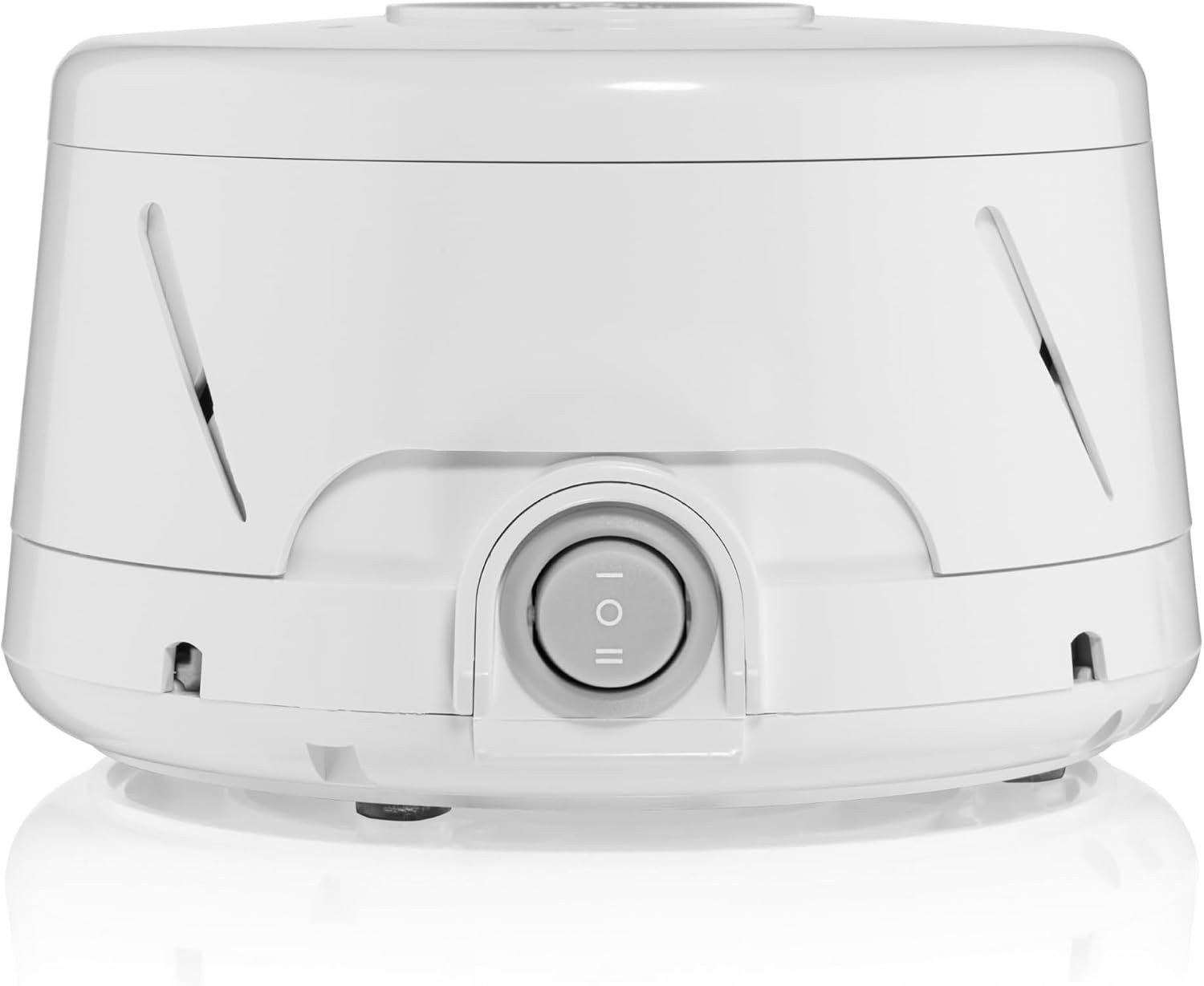
Yogasleep Dohm Classic White-Noise Machine — White
The Dohm Classic makes its sound with an actual fan inside a shell you twist to shape the tone, so the noise is continuous air rather than a recording. It suits people who want a gentle, natural masking sound in an ordinary bedroom and no electronics to manage. Its limits are volume — a small fan cannot cover a loud street — and a mains cord with no battery.
The Impact of Sudden Noises on Micro-Arousals
The human auditory system is a marvel of evolutionary engineering, designed to remain vigilant even when we are unconscious. Unlike our eyes, which close during sleep, our ears remain perpetually open and active, continuously scanning the environment for potential threats. This nocturnal vigilance is deeply embedded in our survival instincts; however, in modern, non-threatening environments, it often serves as a significant liability to our sleep quality. When an abrupt sound occurs—such as a door slamming, a siren wailing, or a partner shifting abruptly—the auditory cortex processes this stimulus and sends an immediate alert to the brain's arousal centers. This sudden acoustic peak, known scientifically as an acoustic transient, can trigger a physiological response known as a micro-arousal. Micro-arousals are brief, often imperceptible awakenings that pull the sleeper from deep, restorative stages of sleep (such as slow-wave sleep or REM sleep) into lighter, transitional stages.
The insidious nature of micro-arousals lies in their subtle disruption. You may not consciously remember waking up, yet these fleeting interruptions wreak havoc on your overall sleep architecture. When a sudden noise penetrates your auditory threshold, it initiates a cascade of sympathetic nervous system activity. Heart rate elevates, blood pressure spikes momentarily, and the release of stress hormones like cortisol and adrenaline is triggered. This "fight or flight" response, however miniature, fundamentally counteracts the physiological state required for deep rest. Over the course of a night, repeated micro-arousals lead to sleep fragmentation, preventing you from spending adequate time in the critical phases of sleep responsible for cellular repair, memory consolidation, and metabolic regulation.
The consequences of sleep fragmentation are profound and far-reaching. Individuals experiencing high frequencies of micro-arousals often wake up feeling unrefreshed, despite having spent an ostensibly adequate number of hours in bed. This chronic sleep debt manifests as daytime fatigue, impaired cognitive function, emotional volatility, and a weakened immune system. The threshold for sound-induced micro-arousals varies widely among individuals and is influenced by factors such as age, stress levels, and baseline sleep pressure. However, the fundamental biological mechanism remains consistent across populations. Recognizing the profound impact of sudden, unpredictable noises is the first critical step in understanding why implementing effective sound mitigation strategies is essential for optimizing sleep quality and, by extension, overall health and well-being. By addressing the root cause of these acoustic disturbances, we can begin to restore the integrity of our sleep cycles.
How White Noise Masks Unpredictable Sounds
To understand the efficacy of white noise in mitigating sleep disruption, one must first comprehend the principle of sound masking, which differs fundamentally from sound blocking. Sound blocking attempts to prevent acoustic energy from reaching the ear, whereas sound masking introduces a new, continuous sound to camouflage intrusive noises. The concept hinges on the way the human brain perceives auditory contrast. When you are trying to sleep in a quiet room, a sudden, isolated noise—like a dripping faucet or a distant car horn—stands out starkly against the baseline silence. It is this stark contrast, the sharp peak in acoustic energy relative to the low ambient noise floor, that triggers the brain's arousal response. White noise operates by artificially raising this ambient noise floor, effectively reducing the signal-to-noise ratio of intrusive sounds and rendering them imperceptible or significantly less disruptive.
True white noise is a specific acoustic signal that contains equal energy across all frequencies within the range of human hearing (typically 20 Hz to 20,000 Hz). Because it encompasses every audible frequency, it resembles a steady "shhh" sound, akin to the static on an untuned television or the continuous rush of a waterfall. When a white noise generator broadcasts this signal, it creates a dense auditory blanket that covers the entire acoustic spectrum. If a sudden noise occurs while white noise is playing, its acoustic energy must compete with the corresponding frequencies already present in the white noise signal. In many cases, the intrusive sound is completely absorbed and masked by the continuous broadband noise, preventing it from reaching the threshold necessary to trigger a micro-arousal.
The beauty of sound masking lies in its ability to address unpredictable and intermittent noises that are otherwise difficult to anticipate or control. For instance, the [[PRODUCT:yogasleep-dohm-classic-white-noise-machine-white]] utilizes a mechanical fan to generate a rich, natural, and highly effective masking sound that can smooth out the sharp edges of environmental noise. Unlike earplugs, which can sometimes amplify internal biological sounds (like heartbeat or breathing) due to the occlusion effect, white noise creates an external auditory focus that many find soothing and conducive to relaxation. The continuous, monotonous nature of the masking sound can also serve as a powerful conditioned stimulus for sleep; over time, the brain associates the specific sound profile of the white noise machine with the onset of rest, facilitating faster sleep latency and a smoother transition into deeper sleep stages.
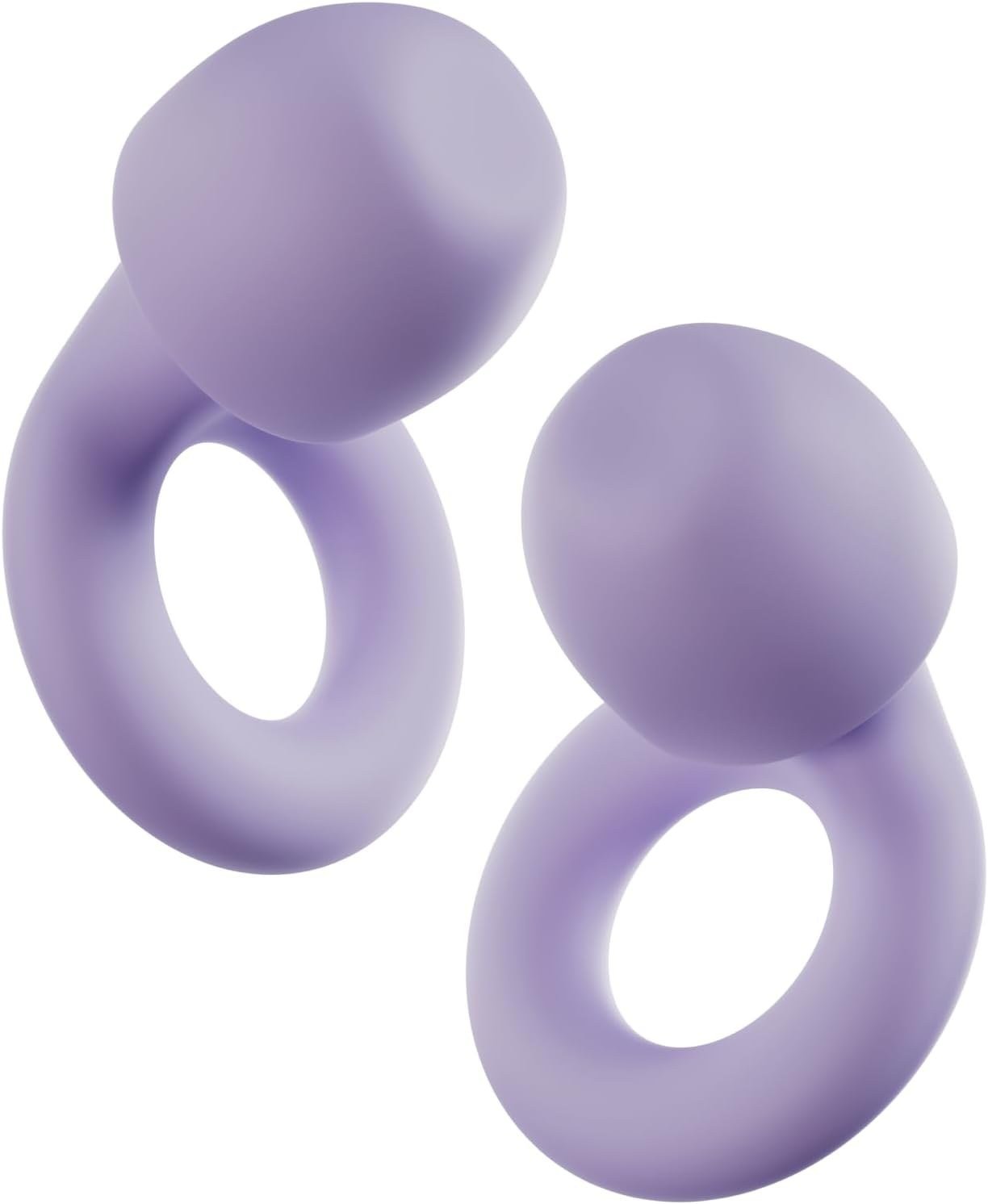
Loop Quiet 2 Earplugs
Loop Quiet 2 are reusable silicone earplugs rated at 24 dB SNR with four tip sizes in the box and a smaller nozzle than the first generation. They are the general-purpose choice for people who want one plug for sleep, flights and open-plan offices rather than a sleep-specific design. Side sleepers who press hard into the pillow should look at Loop Dream instead.
Noise-type decision table
Match the tool to the type of noise instead of choosing the loudest option.
| Option | Best for | Consider something else if | Details |
|---|---|---|---|
| Loop Dream Sleep Earplugs — Black | Side sleepers sharing a bed with a snorer, and anyone who has taken foam plugs out at 1 a.m. because they ached. | You need to hear a child or an alarm clearly, you have recurring ear problems, or you will not experiment with tip sizes to find the seal. | |
| Yogasleep Dohm Classic White-Noise Machine — White | People in ordinary bedrooms who want the softest, most natural masking sound and no technology. | Your bedroom is loud, you need a battery, or you want nature sounds or scheduling. | |
| Soundcore Sleep A30 by Anker | Side sleepers with a snoring partner who want blocking, masking and audio in one device and will keep it charged. | You will not charge something nightly, you want a simple plug, or the cost is hard to justify against earplugs plus a sound machine. | |
| Adaptive Sound Technologies LectroFan Classic — Black | Light sleepers in loud places — apartments, city streets, a snoring partner — who want maximum masking volume without loops. | You want the texture of real moving air, you need nature sounds, or you want something that runs on battery. | |
| SNOOZ Pro Smart White-Noise Machine | People who like fan sound but want schedules, finer volume steps and a fade-out for a nursery or a shared bedroom. | Your room is loud, you need battery power, or you would never open the app. |
After explaining intermittent versus continuous noise; add cards for travel, shared rooms, traffic, and audio users.
The Evolution of Sleep Earplugs: Comfort and Attenuation
While white noise employs the principle of sound masking, earplugs represent the quintessential approach to passive sound attenuation. The concept of plugging the ear canal to achieve silence is ancient, but the technology, materials, and ergonomic design of modern sleep earplugs have undergone a remarkable evolution. Early iterations were often crude, utilizing materials like wax or rigid plastics that provided inconsistent noise reduction and caused significant discomfort during prolonged wear. Today, the landscape of sleep earplugs is characterized by advanced materials engineering, sophisticated acoustic filtering, and a deep understanding of human otological anatomy. The primary goal of a sleep earplug is to maximize the Noise Reduction Rating (NRR) while minimizing the physical sensation of having a foreign object lodged in the ear canal, a balance that has driven significant innovation in the field.
The most common material utilized in contemporary disposable earplugs is slow-recovery polyurethane foam. These plugs are rolled tightly, inserted into the ear canal, and allowed to expand, creating a custom seal that effectively blocks sound waves. While highly effective at achieving high NRR values, foam earplugs can sometimes exert uncomfortable outward pressure on the sensitive walls of the ear canal, leading to soreness after a full night's use. Furthermore, improper insertion often compromises their efficacy. In response to these challenges, manufacturers have developed reusable earplugs utilizing ultra-soft, medical-grade silicones and advanced ergonomic designs. These modern alternatives are engineered to sit flush within the concha of the ear, preventing discomfort for side sleepers and eliminating the pressure associated with expanding foam.
A prime example of this evolutionary leap is the [[PRODUCT:loop-quiet-2-earplugs]]. These devices eschew the traditional cylindrical shape in favor of an anatomical, low-profile ring design coupled with exceptionally soft silicone tips. This approach ensures a secure, comfortable fit that remains in place throughout the night without protruding or causing friction against a pillow. Beyond comfort, the attenuation profile of modern sleep earplugs is carefully calibrated. While it is physiologically impossible to achieve absolute silence (as sound is also conducted through the bones of the skull directly to the cochlea), high-quality earplugs significantly reduce the decibel level of intrusive sounds, pushing them below the threshold of arousal. They are particularly effective at dampening high-frequency noises, such as sirens or sharp clicks, which are notoriously disruptive to sleep architecture. The continuous refinement of materials and design has transformed sleep earplugs from a burdensome necessity into an elegant, highly effective tool for localized acoustic isolation.
Comparing Sound Blocking Effectiveness
When evaluating the efficacy of earplugs versus white noise, it is critical to recognize that they operate on fundamentally different acoustic principles, making a direct comparison complex. Earplugs provide passive attenuation, which means they physically impede the transmission of sound waves into the ear canal. The effectiveness of earplugs is typically quantified by a Noise Reduction Rating (NRR) or a Single Number Rating (SNR), indicating the theoretical decibel (dB) reduction they provide. High-quality foam earplugs can achieve an NRR of up to 33 dB, while silicone alternatives often range between 15 and 27 dB. This reduction is highly effective at lowering the overall volume of the environment. If your bedroom has a baseline noise level of 50 dB (typical for a quiet urban night) and you use earplugs with a 25 dB reduction, the perceived noise level drops to a highly conducive 25 dB. Earplugs excel at blocking distinct, high-frequency sounds, such as alarms, sharp conversations, or sirens. However, they are less effective against low-frequency, structural vibrations, such as the rumble of heavy traffic or a booming bass, because these low frequencies can penetrate the body and skull, bypassing the ear canal entirely.
Conversely, white noise does not block sound; it masks it. The effectiveness of white noise is not measured by decibel reduction, but by its ability to raise the ambient noise floor and decrease the signal-to-noise ratio. If a sudden noise peaks at 60 dB in a silent room (ambient 30 dB), the 30 dB contrast is startling. If a white noise machine is running at 55 dB, that same 60 dB sudden noise only represents a 5 dB contrast, rendering it significantly less perceptible and less likely to cause a micro-arousal. White noise is exceptionally effective at masking continuous or unpredictable mid-to-high frequency sounds, such as conversational murmur, household creaks, or a partner's rustling.
In a head-to-head comparison, the optimal choice depends entirely on the specific acoustic environment. For acute, excessively loud environments—such as sleeping near a construction site, on an airplane, or adjacent to a snoring partner—the physical attenuation provided by earplugs is indispensable. The sheer volume must be reduced to protect sleep integrity. For environments characterized by intermittent, unpredictable noises that startle rather than deafen—such as street traffic, distant dogs barking, or general household activity—white noise is often the superior choice, as it smooths the acoustic landscape without requiring physical insertion into the ear canal. Understanding these distinct capabilities allows for a targeted approach to sleep optimization based on the unique noise profile of your bedroom.
Combining Both for Extreme Environments
In certain extreme auditory environments, relying on a single modality—either earplugs or white noise—may prove insufficient to guarantee uninterrupted sleep. Scenarios such as residing next to an active railway, sharing a bed with a profoundly loud snorer, sleeping during the day as a shift worker, or staying in a noisy urban hotel often present acoustic challenges that exceed the capabilities of isolated interventions. In these demanding situations, the most effective strategy is a synergistic approach: deploying both earplugs and a white noise machine simultaneously. This dual-layered acoustic defense creates an almost impenetrable barrier against environmental disturbances, leveraging the strengths of both passive attenuation and active sound masking to achieve profound tranquility.
When these two methods are combined, their effects compound powerfully. First, the earplugs are inserted to physically reduce the overall decibel level of the environment. By establishing a robust passive barrier, the earplugs significantly diminish the intensity of incoming sound waves. However, as previously discussed, earplugs alone cannot achieve absolute silence, particularly regarding low-frequency sounds or sounds conducted through bone. This is where the secondary layer of the white noise machine becomes critical. The white noise generator is activated in the room, broadcasting a continuous, masking signal. Because the earplugs are already reducing the perceived volume of all sounds, including the white noise itself, the volume of the white noise machine can be set at a higher, more effective masking level without becoming uncomfortably loud or damaging to the ears.
The result is a highly controlled micro-environment. The earplugs blunt the sharp peaks of intrusive noises, and the white noise fills in the remaining gaps, effectively washing away any residual acoustic transients that manage to penetrate the physical barrier. Furthermore, the white noise can help mitigate the "occlusion effect" often experienced with earplugs, where internal body sounds like breathing or heartbeat become amplified in the silence of the plugged ear. The gentle, external sound of the white noise provides an alternative auditory focus, reducing awareness of these internal physiological sounds. This combined approach represents the ultimate protocol for sleep hygiene in challenging environments. By systematically reducing the absolute volume with physical barriers and simultaneously raising the ambient noise floor to mask residual peaks, individuals can cultivate a sanctuary of restorative silence, ensuring that deeply fragmented sleep becomes a relic of the past, regardless of external circumstances.
Conclusion
In the relentless pursuit of restorative sleep, mitigating environmental noise is a paramount objective. Both earplugs and white noise machines offer highly effective, scientifically validated solutions for preserving sleep architecture and preventing disruptive micro-arousals. Earplugs provide essential passive attenuation, drastically reducing the overall decibel level and offering critical defense against loud, acute disturbances. Conversely, white noise excels at sound masking, creating a continuous acoustic blanket that smooths out unpredictable transients and lowers the startling contrast of sudden noises.
Ultimately, the choice between these two modalities is not a matter of which is objectively superior, but rather which is most appropriate for your specific auditory environment, comfort preferences, and physiological sensitivities. For those facing extreme noise challenges, the strategic combination of both methods creates an unparalleled fortress of acoustic isolation. By understanding the distinct mechanisms of sound blocking versus sound masking, you are empowered to curate a personalized sleep sanctuary. Investing in high-quality acoustic interventions is not merely a luxury; it is a profound investment in your cognitive health, emotional resilience, and overall physiological vitality. Silence, whether achieved through physical barriers or engineered soundscapes, remains one of the most vital ingredients for profound and restorative rest.
Join the conversation
Questions and experiences are welcome. Every comment is read by a person before it appears, and your email address is never published.
No comments yet — yours would be the first.