
Introduction
The quest for the ultimate sleep environment is an ongoing pursuit for health enthusiasts, biohackers, and anyone seeking to optimize their restorative rest. In this highly specialized endeavor, the concept of total blackout—absolute darkness without even the faintest intrusion of ambient light—is not merely a preference, but a physiological necessity. Light pollution, pervasive in our modern, hyper-connected world, severely disrupts the human body’s intrinsic circadian rhythms. From the intrusive glare of streetlamps piercing through inadequate window treatments to the insidious blue light emitted by ubiquitous digital devices, our visual systems are constantly bombarded. This relentless photic stimulation inhibits the pineal gland’s synthesis and secretion of melatonin, the pivotal hormone responsible for orchestrating the sleep-wake cycle. When melatonin production is compromised, sleep architecture falters; sleep latency increases, deep sleep (slow-wave sleep) diminishes, and REM (Rapid Eye Movement) cycles become fragmented and less restorative. Consequently, the pursuit of a sleep mask capable of achieving total blackout is a paramount concern for optimizing sleep hygiene and overall health. The market is saturated with rudimentary solutions—flimsy strips of fabric that offer little more than a superficial dimming effect—but the discerning consumer requires a highly engineered intervention. A true total blackout mask is a sophisticated piece of sleep technology, meticulously designed to conform perfectly to the complex topography of the human face, ensuring zero light leakage regardless of head position or ambient illumination. It must bridge the gap between complete environmental control and physical comfort. In this comprehensive, scientifically-grounded analysis, we will look closely at the mechanics, materials, and psychological imperatives underlying the best sleep masks designed to provide absolute darkness. We will evaluate their efficacy in facilitating optimal, uninterrupted sleep and profound cognitive restoration, exploring the critical intersections of design, structural comfort, and photic blockage to guide you toward the ultimate sleep accessory for total sensory deprivation.
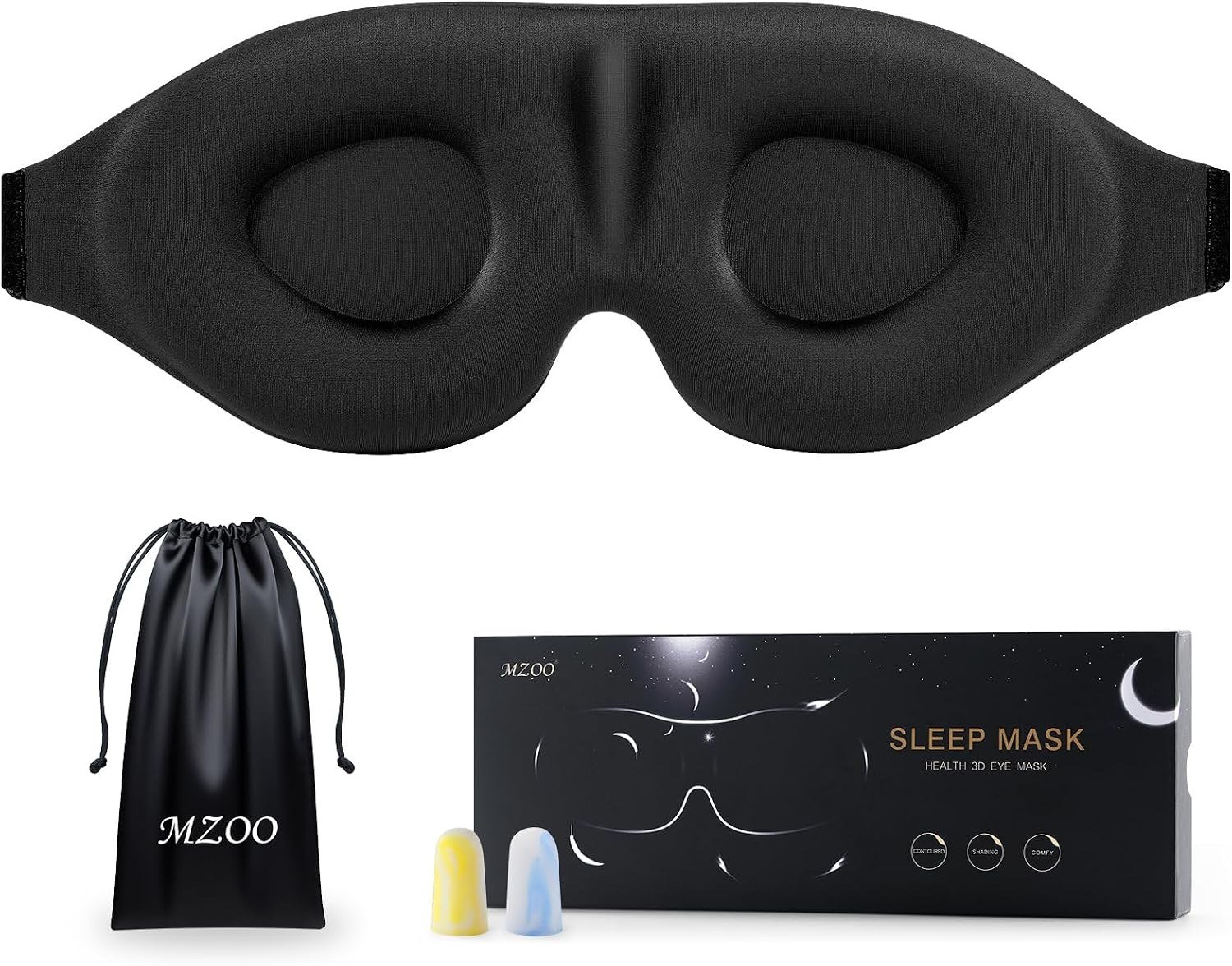
MZOO Luxury 3D Contoured Sleep Mask — Black
The MZOO is a fixed-cup contoured sleep mask: memory-foam cups keep fabric off the eyelids while the edge seals around the nose. It is the sensible first contoured mask for back and side sleepers who want darkness without a premium price. The cups do not move, so a face the shape did not anticipate may see a sliver of light at the nose — that is the Manta PRO's territory.
The Psychology of Total Darkness
The psychological and neurological implications of sleeping in total darkness extend far beyond simple convenience; they are deeply rooted in evolutionary biology and circadian regulation. The human brain has evolved over millennia to synchronize its intricate neurochemical processes with the natural solar cycle. In the absence of light, specialized photosensitive retinal ganglion cells (ipRGCs) cease transmitting excitatory signals to the suprachiasmatic nucleus (SCN) in the hypothalamus, which acts as the body’s master biological clock. This cessation of light input acts as the primary zeitgeber, or environmental time cue, signaling the physiological transition into the restorative phase of the diurnal cycle. When complete darkness is achieved—a state effectively simulated and guaranteed by the highest quality blackout sleep masks—the brain initiates a profound cascade of physiological shifts. Melatonin levels surge predictably, initiating a lowering of core body temperature and a significant decrease in sympathetic nervous system arousal, effectively shifting the body from a state of hyper-alertness to one of profound relaxation and parasympathetic dominance.
However, even minuscule amounts of light—such as the faint, seemingly innocuous glow of a digital alarm clock, the standby light of a television, or moonlight filtering through incomplete blinds—can violently disrupt this fragile equilibrium. The brain perceives this residual light, often penetrating through closed eyelids, misinterpreting it as an indication that the active, waking phase should commence or continue. This subliminal photic disruption can lead to micro-awakenings, shifts into lighter, less restorative sleep stages, and a significant, measurable reduction in subjective sleep quality. Psychologically, the absolute absence of light fosters a profound sense of sensory deprivation, which, when experienced in the safety and comfort of one’s own bed, can dramatically reduce generalized anxiety and hyperarousal states. By decisively eliminating external visual stimuli, the brain is forced to turn its focus inward, accelerating and smoothing the neurological transition from waking consciousness (characterized by beta and alpha wave dominance) into the deeper, slower-wave frequencies characteristic of restorative sleep (theta and delta waves).
Furthermore, the psychological assurance of knowing that one’s sleep environment is completely impervious to unpredictable external light disturbances—such as a sudden, glaring sunrise, an unexpected car headlight sweeping across the room, or a partner turning on a reading lamp—creates a vital cognitive safety net. This allows the individual to consciously and subconsciously relinquish vigilance, a critical, primal prerequisite for achieving deep, uninterrupted, and truly vulnerable sleep. The use of a superior, total blackout mask, therefore, is not merely a physical barrier against rogue photons; it acts as a potent psychological tool that commands the central nervous system to disengage, promoting a deeper sense of environmental security and significantly enhancing the overall architectural integrity of the nightly sleep cycle.
Evaluating Eye Pressure vs. Zero-Pressure Contours
A critical, yet frequently overlooked and misunderstood, dimension in the rigorous evaluation of sleep masks is the tactile interaction between the mask’s physical structure and the delicate, sensitive anatomy of the ocular region. Traditional sleep masks, often constructed as simple, flat bands of unyielding fabric, inherently exert a continuous degree of compressive force directly onto the eyelids and the underlying globes of the eyes. This phenomenon, known as sustained ocular pressure, can have significant deleterious effects on both immediate physical comfort and the underlying physiological quality of sleep. Prolonged pressure on the cornea and surrounding vascular tissues can impede localized blood circulation, artificially increase intraocular pressure, and cause a disturbing, often subconscious sensation of physical confinement or claustrophobia. More importantly from a somnological perspective, continuous pressure directly on the eyelids fundamentally disrupts Rapid Eye Movement (REM) sleep. During REM sleep, the eyes undergo rapid, darting, kinetic movements that are absolutely essential for high-level cognitive processing, complex memory consolidation, and emotional regulation. A mask that restricts or inhibits this necessary kinetic activity can prematurely terminate vital REM cycles or significantly reduce their overall efficacy, predictably leading to waking fatigue, cognitive sluggishness, and emotional lability, regardless of the total duration of sleep ostensibly achieved.
In stark contrast to this antiquated approach, the advent of zero-pressure, contoured sleep masks represents a monumental, scientifically-driven leap forward in sleep hygiene technology. These advanced, ergonomic designs utilize deep, three-dimensional eyecups—often precisely engineered from high-density memory foam or rigid, structured fabrics—that vault completely over the ocular cavity. This creates an internal, protected micro-environment where the eyes can open freely, blink naturally, and, most crucially, engage in absolutely unrestricted REM activity without any frictional or compressive interference. By completely offloading all physical pressure from the sensitive eyelids and intelligently distributing the structural support around the robust, load-bearing orbital bones (the periorbital ridge), these masks completely eliminate the claustrophobic sensation associated with traditional flat designs.
The comprehensive evaluation of these two distinct paradigms—flat compression versus contoured anatomical relief—is absolutely central to selecting an optimal blackout mask. A zero-pressure design is not merely an optional luxury; it is a fundamental biomechanical requirement for individuals seeking to maximize the neurological and physiological restorative benefits of sleep. When assessing a contoured mask, the depth of the eyecups and the compliance of the surrounding foam are critical, non-negotiable metrics. The cups must be deep enough to effortlessly accommodate individuals with unusually long eyelashes while maintaining unyielding structural integrity to prevent collapse during the lateral compression forces of side sleeping. Furthermore, the transition edge where the eyecup meets the orbital bone must be meticulously designed and chamfered to form a perfect, continuous, gapless seal, ensuring total light occlusion without creating localized, uncomfortable pressure points. The transition from a traditional flat mask to a meticulously engineered zero-pressure model is consistently described by users as a profound paradigm shift, improving sleep depth and waking vitality.
Above-the-fold sleep-mask comparison
Prioritize fit and light seal over brand name alone.
-
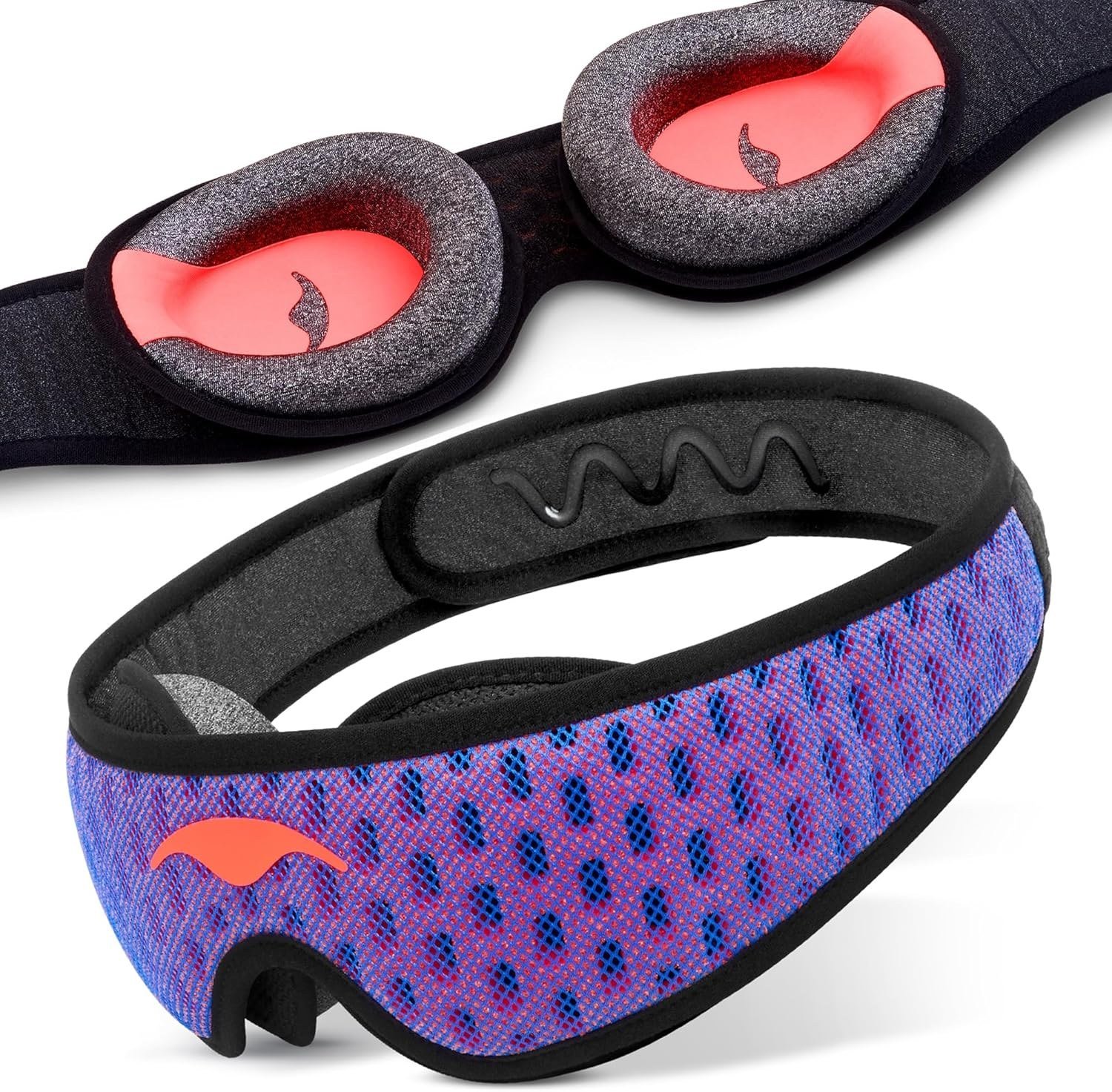
Manta PRO Sleep Mask
Best for
Side sleepers, shift workers and anyone whose flat masks leak light at the nose — people who will trade some bulk for a seal they can adjust.
What it does well
- Eye cups reposition along the strap, so the seal follows your face instead of a fixed average
- Deep cups leave a hollow in front of the eyes — you can blink freely, which matters during REM
Trade-offs
- Noticeably bulkier than a flat silk mask; stomach sleepers who press into the pillow will feel it
- Priced at the top of the category — MZOO and Nidra deliver a similar blackout for less
-
MZOO Luxury 3D Contoured Sleep Mask — Black
Best for
Back and side sleepers buying their first contoured mask, and travellers who want blackout without spending Manta money.
What it does well
- Moulded cups hold fabric away from the eyelids, so blinking and REM eye movement are unrestricted
- Adjustable buckle strap, so it can be worn loose enough to forget
Trade-offs
- Fixed cup spacing: if your eyes sit wider or narrower than the mould, light can creep in at the nose
- Memory foam holds heat more than a fabric mask on warm nights
-
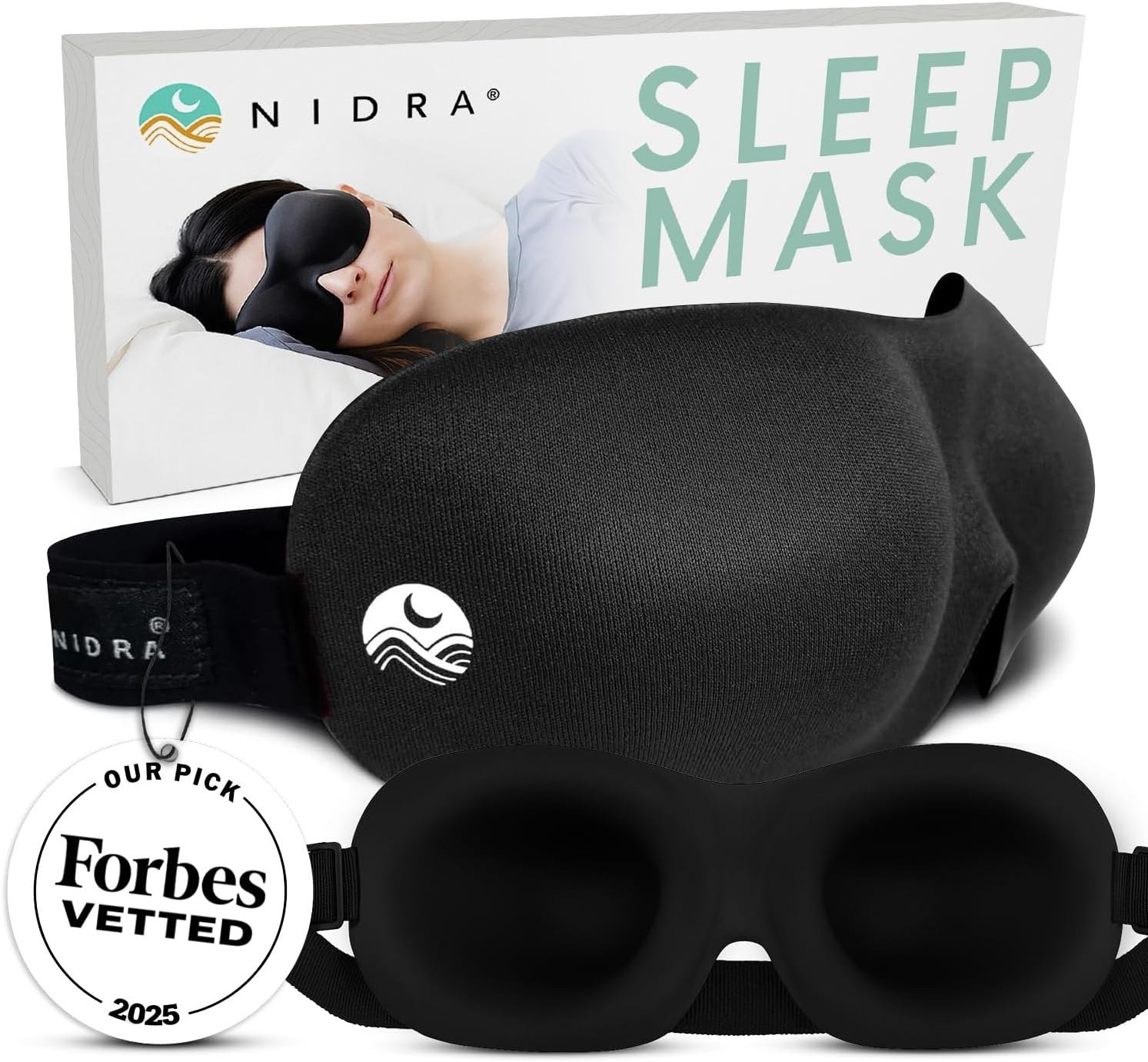
Nidra Contoured Deep-Rest Sleep Mask
Best for
Side sleepers, and anyone who liked the idea of a contoured mask but not the bulk of the ones they tried.
What it does well
- Deep cups keep lids and lashes clear of fabric while the outer profile stays slim
- Light enough to forget, which is what side sleepers actually need from a mask
Trade-offs
- A slimmer edge means a less forgiving seal at the nose than a deeper modular mask
- Cups are fixed; spacing cannot be changed for unusual faces
-
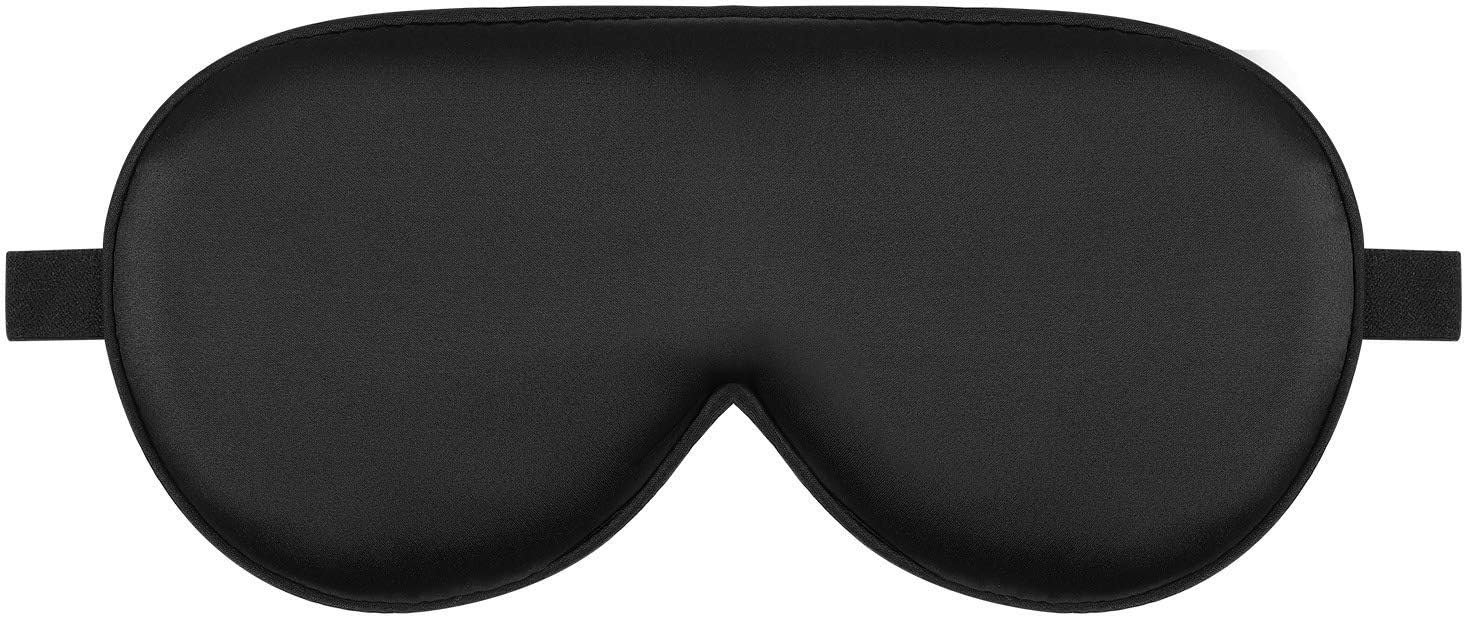
Alaska Bear Mulberry Silk Sleep Mask — Original Black
Best for
Hot sleepers, people with sensitive skin or lash extensions, and anyone who wants a mask they cannot feel more than one they cannot see through.
What it does well
- Silk on both faces runs cooler and holds less moisture than foam or polyester against the skin
- Light and flat, so it disappears in any sleeping position including face-down
Trade-offs
- A flat mask rests on the eyelids, which some people feel during REM and which can crease lashes
- Light leaks at the nose bridge; it dims a room rather than blacking it out
After explaining fit, eye-cup depth, side-sleep comfort, fabric, and light leakage; finish with a fit checklist.
Material Science: Silk vs. Foam
The overall efficacy, subjective comfort, and functional longevity of a total blackout sleep mask are inextricably linked to the precise material science governing its construction and external interfacing. The modern sleep technology industry is predominantly bifurcated into two primary material categories, each boasting distinct, highly specialized thermodynamic, tactile, and structural properties: natural, high-grade silk and advanced synthetic, viscoelastic foams. Understanding the nuanced, complex interplay between these specific materials and the human integumentary system is absolutely paramount for making a highly informed, health-conscious selection.
Mulberry silk, widely and correctly regarded as the absolute gold standard in luxury textiles, offers unparalleled, scientifically proven benefits in terms of friction reduction and cutaneous compatibility. Composed primarily of the natural protein fibroin, high-quality silk possesses an exceptionally smooth, uniform surface topography that glides effortlessly and without resistance against the notoriously delicate, thin skin of the human face. This near-frictionless interaction is critical for preventing the physical formation of sleep creases, minimizing mechanical shear stress on the epidermal layers over prolonged periods of nocturnal use, and theoretically reducing the acceleration of visible aging. Furthermore, silk is highly hypoallergenic, naturally antimicrobial, and inherently resistant to the accumulation of dust mites, making it an unequivocally ideal choice for individuals suffering from sensitive skin, rosacea, or other dermatological conditions. However, when utilized as the sole structural component of a sleep mask, silk presents inherent, unavoidable physical limitations in achieving a true, 100% total blackout. Its incredibly soft, draping nature makes it biomechanically challenging to maintain a perfect, gapless, light-blocking seal around the complex, three-dimensional, highly variable contours of the nose and cheekbones, particularly for active or side sleepers whose facial geometry dynamically shifts and compresses against the pillow throughout the night.
Conversely, advanced synthetic materials, specifically high-density, slow-rebound memory foams (viscoelastic polyurethane), excel phenomenally in structural adaptability, gap-filling, and absolute light occlusion. Memory foam possesses the unique, temperature-sensitive ability to respond dynamically to body heat and localized physical pressure, meticulously and continuously contouring to the highly individualistic, asymmetrical topography of the wearer’s face. This dynamic, responsive conformability allows well-engineered foam-based masks to create a virtually impenetrable, customized seal against ambient light, even effortlessly accommodating prominent nasal bridges, deep-set eyes, and sharp cheekbones. The structural rigidity and memory retention of foam are also the critical physical enablers of the aforementioned, highly desirable zero-pressure eyecup designs. However, synthetic foams can sometimes pose significant challenges regarding breathability and passive thermal regulation. If not adequately engineered with advanced open-cell structures, perforated ventilation channels, or incorporating phase-change cooling gels, dense foam masks can actively trap sensible and insensible perspiration, leading to uncomfortable microclimates, thermal waking, and potential localized skin irritation.
The most sophisticated, efficacious sleep masks often employ a complex hybrid approach, strategically integrating the superior light-blocking and structural characteristics of advanced foams with the unparalleled tactile luxury, cooling properties, and skin-friendly nature of silk or specialized, moisture-wicking modal fabrics. By carefully blending these material sciences, manufacturers can construct sleep masks that excel in both total light occlusion and luxurious comfort.
Top Contenders for 2026
As we progress deep into 2026, the global market for total blackout sleep masks has matured significantly, characterized by an era of rigorous ergonomic engineering, advanced material integration, and obsessive attention to biomechanical detail. After exhaustive, multi-variable evaluation based on the strict, unyielding criteria of absolute light occlusion, zero ocular pressure, thermodynamic regulation, and overall physiological comfort, two standout products have unequivocally established themselves as the absolute apex contenders in this highly specialized category.
The first, and arguably the most technologically advanced and structurally complex offering available, is the highly acclaimed [[PRODUCT:manta-pro-sleep-mask]]. This specific product represents the absolute zenith of the zero-pressure contour paradigm. Engineered with meticulous, almost surgical precision, the Manta Pro utilizes highly specialized, infinitely adjustable, modular eyecups. This newer design allows the individual user to micro-adjust the exact placement, width, and rotational angle of each individual cup on the main band, ensuring a perfectly customized, bespoke fit that effortlessly accommodates any degree of facial asymmetry, varying pupillary distances, or unique orbital bone geometry. The eyecups themselves are exceptionally deep and cavernous, guaranteeing absolutely no physical interference with vital REM sleep movements, even for individuals with exceptionally long eyelashes or eyelash extensions. The true biomechanical brilliance of the [[PRODUCT:manta-pro-sleep-mask]] lies in its advanced, tapered, C-shaped eyecup architecture, which thins perfectly at the outer edges to completely eliminate the common, painful pressure points frequently experienced by dedicated side sleepers. Combined with highly breathable, advanced synthetic mesh fabrics that actively regulate thermal output and dissipate heat, this mask achieves a profound, mathematically perfect 100% blackout seal without inducing any sense of claustrophobia or uncomfortable heat retention. It is a verifiable masterclass in biomechanical design applied directly to sleep hygiene optimization.
In stark contrast to the highly structured, modular foam approach, the [[PRODUCT:alaska-bear-mulberry-silk-sleep-mask-original-black]] represents the absolute, undisputed pinnacle of traditional, flat-mask design utilizing pure, luxury material execution. While it deliberately does not feature the deep, zero-pressure contours of the Manta, its execution of the minimalist, flat-mask design is entirely unparalleled in the industry. Constructed entirely from the highest grade, 19-momme natural mulberry silk on both the interior and exterior surfaces, this mask offers a transcendent, almost ethereal tactile experience. The friction coefficient against the skin is nearly imperceptible, making it the supreme, undisputed choice for individuals fiercely prioritizing dermatological health, anti-aging concerns, and pure, unadulterated sensory luxury. To effectively overcome the inherent light-leakage challenges traditionally associated with soft silk, the [[PRODUCT:alaska-bear-mulberry-silk-sleep-mask-original-black]] utilizes a carefully calibrated, fully adjustable, low-profile head strap and a proprietary internal layer of densely woven, highly opaque blackout fabric. While its soft structure may require slight, occasional manual adjustment throughout the night for highly active, restless sleepers, the unparalleled softness, supreme natural breathability, and undeniable, classic elegance of the natural silk make it a dominant, highly relevant force for those who find rigid, structured foam masks simply too intrusive or cumbersome. It definitively proves that with exceptional craftsmanship and material purity, the traditional design can still achieve extraordinary results.
How to Care for and Maintain Your Sleep Mask
The substantial financial and health investment in a high-fidelity, total blackout sleep mask necessitates a commensurate, uncompromising commitment to proper, ongoing care and rigorous maintenance. A sleep mask exists in a highly unique, demanding micro-environment, spending upwards of eight continuous hours every single night in direct, intimate, friction-heavy contact with the delicate skin of the face. During this extended period, it actively absorbs sensible perspiration, naturally occurring sebaceous secretions (sebum), dead skin cells, natural skin oils, and potentially various cosmetic residues or heavy night creams. Failure to maintain a rigorous, consistent hygienic protocol will inevitably compromise not only the structural integrity and functional longevity of the mask's specialized materials but also the dermatological health of the end-user, rapidly and predictably leading to bacterial proliferation, the development of acne mechanica, clogged pores, and localized, painful skin irritation.
The specific, required maintenance regimen is strictly and exclusively dictated by the underlying material composition of the mask itself. For structurally complex masks constructed primarily of high-density viscoelastic memory foam and advanced, bonded synthetic fabrics—such as those featuring deep, zero-pressure contours—vigorous machine washing is strictly, universally prohibited. The intense mechanical agitation, elevated water temperatures, and harsh, highly alkaline surfactants used in standard household laundering processes will rapidly, irreversibly degrade the delicate viscoelastic properties of the foam, causing it to prematurely lose its structural resilience, crumble, and, consequently, permanently lose its ability to form a perfect, light-blocking facial seal. These specialized masks must be meticulously, patiently hand-washed using cool to lukewarm water and a highly diluted, pH-neutral, specialized hypoallergenic detergent. The cleaning focus should be entirely on gentle, localized agitation of the external fabric surfaces, followed by exhaustive, repeated rinsing with clean water to ensure absolutely no chemical residue remains trapped in the foam to irritate the skin upon subsequent use. Crucially, foam masks must be allowed to air-dry completely and naturally in a well-ventilated, dry area, strictly shielded from direct ultraviolet (UV) radiation or any high-heat sources like radiators, which can prematurely age, discolor, and desiccate the synthetic polymers.
Conversely, luxury masks meticulously crafted from pure, natural mulberry silk demand an entirely different, albeit equally rigorous and careful, approach. Silk fibroin, being a natural protein structure, is highly susceptible to rapid, catastrophic chemical degradation from standard alkaline laundry detergents and aggressive enzymatic stain removers. Therefore, authentic silk masks must exclusively be washed using highly specialized, low-pH, silk-friendly detergents or, in a pinch, a very mild, unfragranced, high-quality baby shampoo. While some exceptionally high-quality silk masks may technically tolerate the most delicate, cold-water machine cycle provided they are enclosed inside a protective, fine-mesh laundry bag, gentle hand washing remains the absolute gold standard to definitively preserve the fabric's luminous, characteristic sheen and frictionless, buttery texture over years of use. When drying natural silk, one must absolutely never wring, twist, or aggressively stretch the fabric, as this physical trauma will irreparably break and damage the delicate internal fibers. Instead, the user should gently, evenly press the wet mask between two clean, highly absorbent cotton towels to carefully extract excess moisture, and then lay it perfectly flat to dry in a cool, heavily shaded environment away from direct sunlight. By strictly, religiously adhering to these stringent, material-specific care protocols, users can confidently ensure their premium blackout masks remain flawlessly hygienic, structurally sound, and fully capable of delivering unparalleled sleep optimization and total darkness for many years to come.
Conclusion
In the relentless, scientifically-backed pursuit of optimized rest and profound, systemic cognitive recovery, the deliberate implementation of a meticulously engineered, highly effective total blackout sleep mask permanently transcends the realm of mere luxury accessory, firmly establishing itself as a fundamental, indispensable pillar of advanced sleep hygiene protocols. As we have exhaustively detailed throughout this comprehensive analysis, the physiological and psychological imperatives of absolute, uninterrupted darkness are strictly non-negotiable for the proper, natural regulation of delicate circadian rhythms, the maximization of endogenous melatonin synthesis, and the seamless, uninterrupted progression of complex sleep architecture, particularly the vital, restorative REM and slow-wave (deep) sleep stages. The stark, functional dichotomy between traditional, often compressive designs and the newer, biomechanically advanced zero-pressure contours highlights the absolute, critical necessity of intelligently aligning physical sleep interventions with complex ocular anatomy to ensure maximum restorative efficacy and long-term user comfort.
Whether an individual ultimately prioritizes the highly structured, biomechanically superior, customizable light occlusion definitively offered by advanced synthetic models like the [[PRODUCT:manta-pro-sleep-mask]], or conversely favors the unparalleled dermatological compatibility, breathability, and frictionless, classic luxury of pure natural materials perfectly exemplified by the [[PRODUCT:alaska-bear-mulberry-silk-sleep-mask-original-black]], the primary objective remains singularly paramount: the complete, absolute, and total elimination of all environmental photic interference. By deeply understanding the intricate, underlying material sciences, strictly adhering to rigorous, material-specific hygienic maintenance protocols, and fiercely prioritizing absolute light occlusion without ever sacrificing essential tactile comfort, discerning, health-conscious individuals can powerfully leverage these sophisticated, modern tools to directly command their neurobiology. Doing so allows profound, restorative sleep, drastically improving waking vitality, emotional resilience, and overall cognitive performance in our increasingly illuminated, relentlessly hyper-connected modern world. The path to mastering one's sleep relies entirely on controlling the environment, and a superior blackout mask is the ultimate tool for achieving total darkness.

Join the conversation
Questions and experiences are welcome. Every comment is read by a person before it appears, and your email address is never published.
No comments yet — yours would be the first.