
Introduction
The quest for a perfect night’s sleep is an eternal human endeavor, fraught with countless challenges, from environmental disturbances to internal psychological restlessness. In the modern era, our sleep environments are increasingly subjected to a relentless barrage of unwanted auditory stimuli—traffic noise echoing through urban canyons, barking dogs, loud neighbors engaging in late-night conversations, or the subtle, pervasive hum of household electronic devices. To combat these relentless intrusions, millions of individuals have turned to sophisticated acoustic interventions, and paramount among these solutions is the ubiquitous white noise machine. These devices, seemingly simple in their outward function and appearance, represent a highly advanced application of acoustic engineering designed to fundamentally alter our neurological perception of our immediate sonic environment. This comprehensive, exhaustive review will look closely at the rigorous science, intricate mechanics, and practical application of white noise machines, exploring exactly how they transform chaotic, unpredictable soundscapes into tranquil, predictable sanctuaries optimized for restorative slumber. We will rigorously analyze the complex physics underlying sound masking, demystify the distinct differences between various noise "colors" such as white, pink, and brown noise profiles, and critically evaluate the divergent engineering paradigms of analog mechanical fan-based systems versus advanced digital speaker arrays. Furthermore, we will systematically and objectively review some of the leading, most technologically advanced models currently dominating the consumer market today, rigorously evaluating their overall acoustic efficacy, structural build quality, and diverse sonic profiles. Finally, we will provide a comprehensive, evidence-based guide to the absolute optimal placement of these devices within the bedroom to maximize their therapeutic benefits and ensure absolute acoustic coverage. Understanding the profound, neurological impact of acoustic environments on human physiology is absolutely crucial for anyone seeking to optimize their personal sleep hygiene. By comprehensively dissecting the mechanics, physical properties, and objective merits of sound masking technology, this massive article aims to equip our readers with the requisite knowledge necessary to make fully informed, optimal decisions about integrating these powerful acoustic interventions into their nocturnal routines, ultimately paving the comprehensive way for significantly deeper, more continuously uninterrupted, and profoundly restorative sleep cycles night after night. Our detailed analysis goes beyond the surface-level marketing claims, looking at the empirical evidence that supports the use of acoustic therapies in modern sleep medicine, ensuring that every reader can transform their bedroom into an optimized haven for health and wellness.
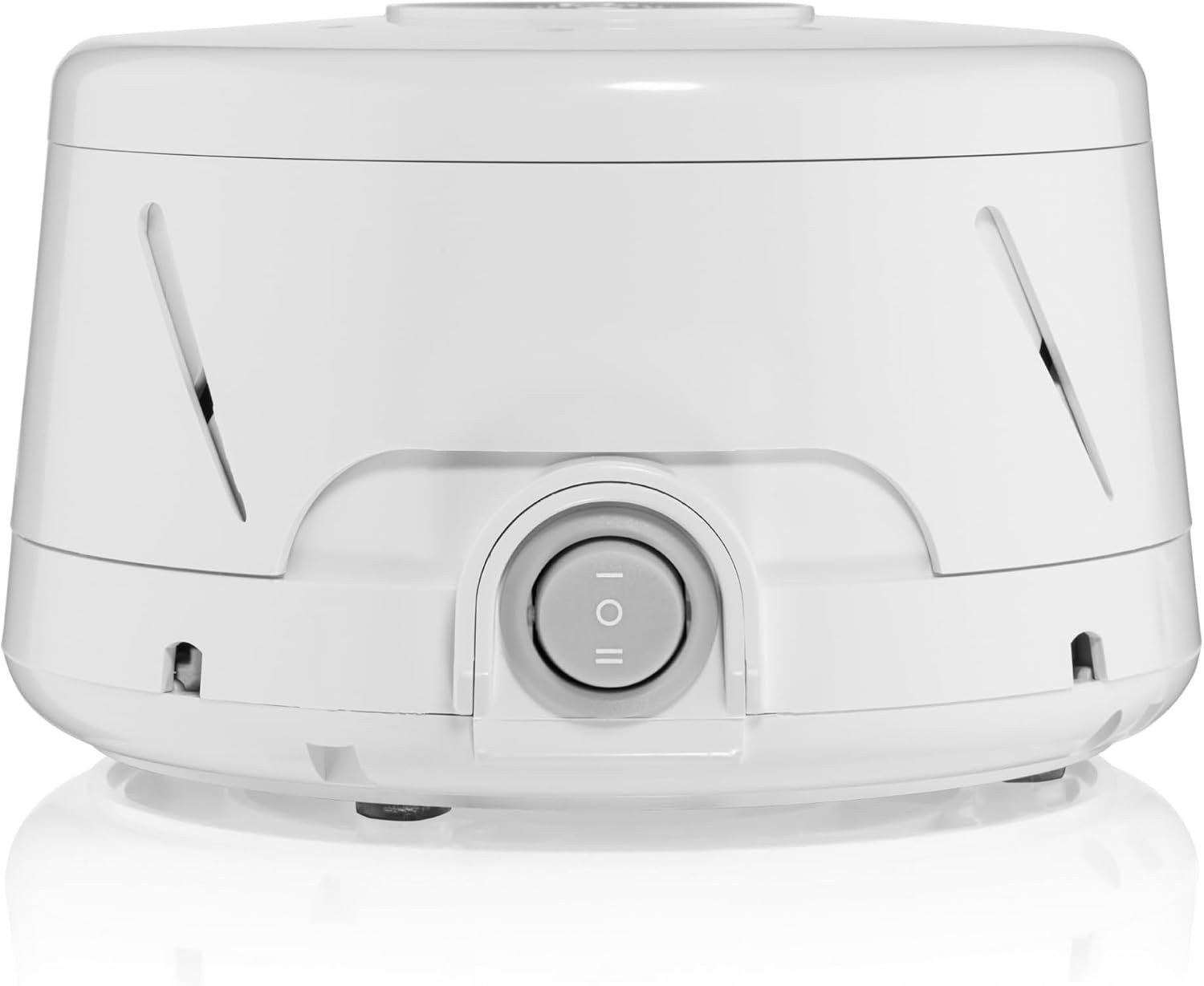
Yogasleep Dohm Classic White-Noise Machine — White
The Dohm Classic makes its sound with an actual fan inside a shell you twist to shape the tone, so the noise is continuous air rather than a recording. It suits people who want a gentle, natural masking sound in an ordinary bedroom and no electronics to manage. Its limits are volume — a small fan cannot cover a loud street — and a mains cord with no battery.
The Physics of Sound Masking
To fully and properly appreciate the undeniable efficacy of a dedicated white noise machine, it is fundamentally essential to understand the underlying physical and psychoacoustic principles of sound masking. Sound, at its absolute core, is a mechanical wave that continuously propagates through a physical medium—typically the air surrounding us—creating rapid fluctuations in barometric pressure that are subsequently detected by the intricate mechanisms of the human auditory system. When multiple distinct sound waves intersect in a given localized space, their respective amplitudes combine according to the fundamental physical principle of superposition, leading to instances of either constructive or destructive interference. However, it is vital to note that sound masking, as employed by these devices, does not rely on active noise cancellation—a completely different technological process involving active destructive interference where an artificially inverted sound wave is actively generated to exactly neutralize an incoming noise. Instead, sound masking effectively leverages the fascinating psychoacoustic phenomenon of auditory masking. Auditory masking occurs when the neurological perception of one sound (the target or signal, typically an unwanted, disruptive noise like a slamming door or a revving engine) is completely obscured, diminished, or rendered imperceptible by the continuous presence of another sound (the masker, such as the constant output from a white noise machine). This fascinating phenomenon is intricately and inextricably linked to the critical bands of human hearing and the physiological structure of the inner ear. The cochlea, a complex, fluid-filled, snail-shaped structure located deep within the inner ear, acts as a highly sensitive frequency analyzer, actively separating complex incoming sounds into their constituent frequencies along the length of the basilar membrane. When a broad-spectrum, continuous sound—like perfectly calibrated white noise—is continuously introduced into the sleeping environment, it actively stimulates a wide, comprehensive swath of the basilar membrane simultaneously and continuously. If a sudden, intrusive, sharp noise (e.g., a car horn or a loud shout) occurs within the frequency range already covered by the continuous masking sound, the neurological response to the intrusive noise is significantly attenuated or entirely blocked from conscious perception because the relevant auditory nerve fibers are already actively and continuously firing in direct response to the continuous masker. Furthermore, sound masking effectively and significantly reduces the overall signal-to-noise ratio in the sleeping environment. By deliberately elevating the ambient background sound level with a soothing, continuous audio profile, the relative, perceivable difference in acoustic intensity between sudden, sharp disturbances and the baseline environmental noise floor is drastically minimized. This is a critically important physiological factor because the human brain is highly sensitive and neurologically predisposed to react to abrupt, sudden changes in sensory input; it is very often the sudden, sharp contrast of a sound against a completely quiet background, rather than the absolute decibel volume of the sound itself, that forcefully triggers physiological arousal and abruptly disrupts a sleep cycle. By significantly narrowing the dynamic acoustic range of the auditory environment, a constant, soothing acoustic background successfully renders sudden, unpredictable noises far less salient and startling, thereby actively preventing the reticular activating system located in the brainstem from prematurely initiating a wakeful, alert state. Thus, the complex physics of sound masking represents a highly sophisticated, deliberate manipulation of both acoustic energy and human auditory perception, creating a significantly more stable, predictable, and ultimately tranquil sonic environment that is deeply conducive to uninterrupted, high-quality rest.
White vs. Pink vs. Brown Noise Profiles
While the specific term "white noise" is very often used colloquially and broadly to describe virtually any constant background sound used for sleep or concentration, the scientific field of acoustics rigorously categorizes these continuous noise profiles based on their specific spectral density—the precise mathematical distribution of acoustic power or energy across different audible frequencies. These distinctly different sonic profiles are colloquially assigned specific "colors" to differentiate them, with white, pink, and brown (or sometimes red) noise being the most prevalent, widely researched, and commonly utilized in acoustic sleep therapy applications. Understanding the profound nuances and distinct characteristics of these acoustic colors is absolutely vital for purposefully selecting the optimal, most relaxing auditory environment tailored to highly specific, individual physiological needs. True white noise is strictly characterized by having perfectly equal energy per frequency bandwidth. This means that if you were to precisely measure the acoustic sound power between 100 Hz and 200 Hz, it will be exactly identical to the measured power between 1,000 Hz and 1,100 Hz, or even 10,000 Hz and 10,100 Hz. Because the human auditory system is naturally predisposed to perceive higher frequencies as sounding significantly louder than lower frequencies of the exact same energy, true white noise often has a distinctly sharp, crisp, hissing quality to the human ear—often described as being highly reminiscent of static on an untuned analog television or radio. While true white noise is highly effective at aggressively masking a very wide array of disparate sounds due to its incredibly broad, comprehensive spectrum, some sensitive individuals find the highly prominent, piercing high-frequency content of pure white noise to be overly harsh, grating, or distracting for the explicit purposes of deep relaxation and sleep. Pink noise, on the other hand, possesses a completely different mathematical acoustic profile: equal energy per octave. In practical, acoustic terms, this means that the precise power density decreases by exactly 3 decibels per octave as the acoustic frequency increases. Because each successive octave encompasses a significantly wider range of numerical frequencies (e.g., 100-200 Hz is exactly one octave, but 10,000-20,000 Hz is also exactly one octave), the overall acoustic energy is far more heavily weighted toward the lower, bass-heavy end of the audio spectrum to strictly compensate. Consequently, pink noise sounds significantly deeper, noticeably warmer, and far more balanced and pleasant to the average human ear, very closely resembling natural, soothing environmental phenomena such as steady, continuous rainfall, rustling leaves in a gentle breeze, or a steadily flowing river. Emerging neurological research heavily suggests that pink noise may be particularly and uniquely effective at actively promoting deep, slow-wave sleep and potentially even enhancing cognitive memory consolidation during slumber. Brown noise—sometimes also referred to as red noise, drawing a direct analogy to the low-frequency end of the visible electromagnetic light spectrum—takes this high-frequency attenuation even further and more aggressively. Its acoustic power density decreases by a substantial 6 decibels per octave, resulting in a sound profile that is extremely heavily dominated by deep, low-frequency energy. The resulting sound is incredibly deep, incredibly rich, and profoundly rumbling, very often compared favorably to a distant, rolling thunderstorm, the continuous roar of a heavy, crashing surf, or the deep, interior ambient sound of a large airplane cabin during cruising altitude. For individuals who are highly, acutely sensitive to high-frequency sounds or those specifically seeking an aggressively masking but profoundly soothing, deep auditory blanket to block out low-frequency intrusions like bass beats or heavy traffic, brown noise very often represents the absolutely most comforting, relaxing, and highly effective option, thoroughly enveloping the listener in a deep, impenetrable sonic cocoon of tranquility.
Above-the-fold comparison table
Compare sound type, controls, portability, and app preference.
| Option | Best for | Consider something else if | Details |
|---|---|---|---|
| Yogasleep Dohm Classic White-Noise Machine — White | People in ordinary bedrooms who want the softest, most natural masking sound and no technology. | Your bedroom is loud, you need a battery, or you want nature sounds or scheduling. | |
| Adaptive Sound Technologies LectroFan Classic — Black | Light sleepers in loud places — apartments, city streets, a snoring partner — who want maximum masking volume without loops. | You want the texture of real moving air, you need nature sounds, or you want something that runs on battery. | |
| SNOOZ Pro Smart White-Noise Machine | People who like fan sound but want schedules, finer volume steps and a fade-out for a nursery or a shared bedroom. | Your room is loud, you need battery power, or you would never open the app. | |
| Dreamegg D3 Pro White-Noise Sound Machine | Travellers and couples who want sound variety, a headphone option and a battery in a machine with a track record. | You want loop-proof fan sound for a fixed bedside, or maximum volume for a loud room. |
After a brief methodology and audience statement; follow with individual reviews and a final decision guide.
Mechanical Fans vs. Digital Speakers
The modern technological landscape of dedicated white noise machines is primarily and distinctly divided into two fundamental, competing paradigms: traditional analog mechanical fan-based systems and advanced digital solid-state audio devices. Each distinct approach possesses entirely different acoustic characteristics, vastly different engineering philosophies, and highly specific practical advantages, strongly appealing to different, specific segments of the broad consumer market based on their personal acoustic preferences and technological needs. Mechanical fan-based sound machines operate on a remarkably elegant, simple, and beautifully straightforward premise. Enclosed entirely within a durable housing—which is typically designed as an asymmetrical, carefully tuned acoustic dome to optimize sound resonance—is a reliable electric motor directly driving a physical fan blade assembly. The rapid rotation of the internal blades generates continuous physical air turbulence, forcefully pushing air through strategically placed, adjustable vents and carefully designed acoustic baffles to produce a continuous, rushing sound of moving air. The resulting acoustic profile from this mechanical process is intrinsically analog, wholly organic, and infinitely non-repeating because it is generated by chaotic physical fluid dynamics. Because the sound is generated physically and continuously by moving air interacting with physical structures, it naturally possesses a deep, remarkably robust, and incredibly rich, complex harmonic structure that even the most advanced digital devices often profoundly struggle to perfectly, indistinguishably replicate. Loyal users of mechanical machines frequently and enthusiastically praise the unparalleled "warmth," absolute authenticity, and natural, soothing quality of the analog sound, consistently noting the absolute absence of any perceptible, repeating looping or artificial digital artifacts that can occasionally plague solid-state alternatives. The primary, tactile mechanism for actively adjusting the sound profile involves physically, manually manipulating the external housing to change the exact size and shape of the exposed air vents, directly altering the acoustic tone, pitch, and overall volume by mechanically modifying the internal airflow dynamics. Conversely, highly advanced digital white noise machines utilize complex integrated circuits, expansive solid-state memory chips, and high-fidelity internal speaker arrays to digitally reproduce either carefully pre-recorded audio tracks or dynamically, algorithmically generated audio signals. These modern digital devices offer an unprecedented level of absolute versatility, customization, and feature richness that is entirely unavailable and physically impossible in their simpler mechanical counterparts. A single, compact digital unit can flawlessly produce an exhaustive, massive array of distinct sonic environments, ranging from mathematically pure true white, pink, and brown noise to a massive assortment of highly realistic natural soundscapes (crashing ocean waves, gentle rainstorms, dense jungle ambiance) and deeply synthesized, relaxing ambient tracks. Furthermore, digital machines almost always incorporate advanced, highly useful functionalities such as extreme precision digital volume controls with dozens of increments, programmable shut-off timers, integrated alarm clock features, and very often even advanced Bluetooth connectivity for functioning as a high-quality external audio speaker for podcasts or music playback. However, it is paramount to understand that the ultimate acoustic quality of a digital machine is heavily, entirely dependent on two critically important technological factors: the overall length, resolution, and fidelity of the stored audio loops, and the physical quality and frequency response of the internal speaker driver itself. Inferior, low-budget digital models may exhibit distinctly perceptible, annoyingly repetitive loops that can rapidly become highly distracting to the sensitive listener, completely defeating the fundamental purpose of the relaxation device. Additionally, a cheap, low-quality speaker driver may profoundly struggle to accurately and powerfully reproduce the deep, resonant low-frequency energy characteristic of high-quality brown or pink noise, resulting in a thin, tinny, or noticeably artificial sound that fails to adequately mask environmental disruptions. The ultimate choice between analog mechanical and modern digital fundamentally boils down to a strict personal preference for pure, organic acoustic warmth and simplicity versus unparalleled, highly customizable versatility and advanced technological feature integration.
Reviewing the Best White Noise Machines
Handling the increasingly saturated, highly competitive market of acoustic sleep aids requires a highly discerning, objective analysis of sheer performance, acoustic fidelity, build quality, and overall long-term value. In our extensive, rigorous evaluation of dozens of popular devices, several truly standout models unambiguously emerged as the undisputed leaders in their respective categories. For those discerning consumers specifically seeking the absolute pinnacle of digital versatility combined with incredibly robust, high-fidelity acoustic performance, the [[PRODUCT:dreamegg-d3-pro-white-noise-sound-machine]] represents a truly exceptional, industry-leading offering. This remarkable device successfully transcends the common limitations very often associated with standard digital sound generators by featuring a remarkably high-fidelity, meticulously customized speaker driver that is specifically tuned and engineered to accurately and powerfully reproduce the full, rich frequency spectrum of its extensive internal sound library. The Dreamegg D3 Pro offers a highly curated, expansive selection of precisely engineered sounds, including perfectly calibrated true white noise variations, finely balanced, incredibly realistic fan sounds, and meticulously recorded, high-resolution nature tracks that rival actual outdoor recordings. Its most standout, impressive feature, however, is the absolutely impeccable audio mastering and engineering; the digital loops are so flawlessly and integrated that they eliminate any and all of the distracting, noticeable "seams" or repeating patterns that frequently plague lesser digital models. The unit also boasts a highly sophisticated, modern aesthetic, a remarkably intuitive, easy-to-use interface, and a robust, high-capacity internal battery for unparalleled portability, making it a highly versatile, indispensable tool for both permanent home setups and demanding travel environments. In the rapidly evolving realm of smart, modern, internet-connected acoustic solutions, the [[PRODUCT:snooz-pro-smart-white-noise-machine]] absolutely commands significant attention and respect. Snooz masterfully bridges the historically difficult gap between mechanical, analog authenticity and recent digital convenience. Unlike traditional, purely manual fan-based machines that strictly require physical manipulation of the outer housing, the highly advanced Snooz Pro utilizes a proprietary, ultra-quiet internal fan mechanism that is entirely controlled by an advanced digital interface and a feature-rich companion smartphone application. This innovative, groundbreaking design allows users to precisely, remotely calibrate the exact tone and volume from their phone, effortlessly scheduling automated, customized routines that can gradually fade the mechanical sound in and out to perfectly align with their personal circadian rhythms and sleep schedules. The actual sound quality produced by the Snooz Pro is remarkably authentic and deeply soothing, perfectly capturing the rich, deep, organic rush of moving air that purely digital emulations so often miss, yet successfully providing all the advanced scheduling, remote control, and customization features expected of a premium modern smart home device. Both the exceptional Dreamegg D3 Pro and the innovative Snooz Pro truly represent the absolute vanguard of modern sleep technology, offering highly tailored, incredibly effective solutions to the pervasive, modern problem of environmental noise pollution. The ultimate choice between these two exceptional devices ultimately depends entirely on individual priorities: the incredibly expansive sound library and flexible portability of the digital Dreamegg, or the deeply organic, purely analog sound and sophisticated smart scheduling capabilities of the smart-mechanical Snooz. Both devices absolutely deliver exceptional, unmatched auditory masking, powerfully transforming the chaotic, stressful noise floor of modern life into a deeply tranquil, perfectly optimized environment for profound, highly restorative, and totally uninterrupted sleep.
Optimal Placement in the Bedroom
The absolute, overall efficacy of any white noise machine, regardless of its technological pedigree or price point, is profoundly and inextricably influenced not only by its intrinsic acoustic properties and volume capabilities but also by its highly strategic, deliberate placement within the sleeping environment. The fundamental physics of acoustic sound propagation dictate that the precise physical location of the sound source relative to both the listener’s ears and the primary external noise sources will significantly, measurably impact the device’s masking efficiency and the overall subjective perceptual experience of the user. A very common, yet often highly suboptimal and frequently detrimental, practice is to simply place the white noise machine directly on the nightstand immediately adjacent to the bed and the sleeper's head. While this undeniably ensures the sound is easily and clearly audible, it can very often lead to an incredibly uneven, uncomfortable acoustic field. When placed too closely to the ear, the necessary sound pressure level (the absolute volume) required to achieve adequate masking of distant noises may be perceived as deeply uncomfortably loud or highly obtrusive by the listener, potentially causing severe auditory fatigue, localized annoyance, or even subtle hearing strain rather than promoting deep relaxation. Furthermore, a highly localized, point-source sound emanating from mere inches away does not effectively create the broad, uniform, room-filling acoustic "blanket" that is absolutely most effective for generalized, comprehensive sound masking. To truly maximize the therapeutic, sleep-inducing benefits of the device, the fundamental, guiding principle of acoustic placement is to deliberately position the machine as a physical acoustic buffer precisely between the listener and the primary source of disruptive, unwanted noise. For example, if the primary irritant disrupting your sleep is external street traffic noise, sirens, or loud neighbors residing next door, the absolutely optimal placement is typically right near the bedroom window or directly against the shared adjoining wall, respectively. By actively intercepting the intrusive, unwanted sound waves immediately near their precise point of entry into the room, the white noise machine effectively, powerfully elevates the local noise floor at the exact boundary, significantly attenuating and masking the disruptive signal before it ever has a chance to traverse the room and reach the sleeping area. This highly strategic placement strategy allows the listener to keep the absolute volume of the machine at a significantly more moderate, subjectively comfortable level while still achieving highly effective, comprehensive masking of the external threat. Conversely, if the primary disruptive noises are internal—such as a loudly snoring partner sharing the bed, or general household activities occurring in adjacent hallways or living rooms—the machine should be placed highly strategically to broadly diffuse the sound across the entire sleeping space. Placing the device solidly on the floor or on a low table completely across the room can greatly facilitate better, more even sound dispersion, especially for analog mechanical fan models or digital devices specifically prioritizing heavy, low-frequency output (like brown noise), as these longer acoustic waveforms interact extensively with the solid room boundaries (walls, floor) to create a much more enveloping, comprehensive acoustic field. Additionally, elevating the machine slightly off the carpet can actively prevent the crucial sound waves from being entirely muffled or absorbed by dense furnishings or thick flooring. Extensive, patient experimentation is absolutely crucial; users should systematically test several different locations, carefully noting the subjective balance between achieving adequate, effective masking of external disturbances and maintaining the subjective, personal comfort of the background sound level at the actual resting position. Proper, thoughtful placement is undeniably the critical, often-overlooked final step in fully optimizing the acoustic environment for truly profound, restorative sleep.
Conclusion
In a modern, hyper-connected era characterized by relentless, inescapable auditory stimulation and environmental noise pollution, the pursuit of profound, totally uninterrupted sleep has increasingly necessitated the widespread adoption of sophisticated, highly engineered environmental controls. The white noise machine, while very often underestimated in its sheer technological complexity and physiological impact, serves as an absolutely critical, indispensable tool in this vital endeavor, actively leveraging the complex physics of psychoacoustic auditory masking to powerfully neutralize disruptive, chaotic soundscapes. By thoroughly understanding the distinct, mathematically defined spectral profiles of white, pink, and brown noise, individuals can highly precisely tailor their bedroom acoustic environment to their highly specific neurophysiological preferences, maximizing personal comfort and overall therapeutic efficacy. The fascinating technological dichotomy between traditional, organic mechanical fan-based systems and advanced, versatile digital solid-state devices offers consumers a distinct choice between pure, resonant analog warmth and unparalleled, modern feature integration. State-of-the-art, premium models like the carefully engineered [[PRODUCT:dreamegg-d3-pro-white-noise-sound-machine]] and the highly innovative [[PRODUCT:snooz-pro-smart-white-noise-machine]] absolutely represent the undisputed pinnacle of their respective technological categories, offering unparalleled performance and reliability. Ultimately, however, it is crucial to recognize that the overall success of these acoustic interventions relies not solely on the quality of the hardware itself, but heavily on the highly strategic, thoughtful application and placement of sound within the physical sleeping space. By meticulously, systematically optimizing the physical placement of the device to actively intercept and comprehensively obscure intrusive noise at its source, users can powerfully transform their otherwise noisy bedrooms into true, unassailable sanctuaries of profound rest and relaxation. Integrating a premium, high-quality white noise machine into a comprehensive, holistic sleep hygiene regimen represents a profound, highly beneficial long-term investment in overall physical health, mental well-being, and the essential, life-changing restorative power of deeply uninterrupted sleep.

Join the conversation
Questions and experiences are welcome. Every comment is read by a person before it appears, and your email address is never published.
No comments yet — yours would be the first.