Understanding Your Circadian Rhythm: The Secret to Waking Up Energized
Have you ever wondered why you naturally wake up at 7:00 AM on a weekend when you desperately want to sleep in? Or why you hit a brick wall of exhaustion every afternoon at 3:00 PM, regardless of what you ate for lunch? The answer lies not in your willpower, your motivation, or even exactly how many hours of sleep you got the night before. The answer lies in a microscopic cluster of cells deep within your brain. This is your circadian rhythm, the master biological clock that orchestrates almost every physiological process in your body.
In this comprehensive guide, we will journey deep into the science of circadian biology. We will explore the Suprachiasmatic Nucleus (SCN), the role of melanopsin in your eyes, the delicate interplay of hormones like melatonin and cortisol, and the concept of sleep pressure driven by adenosine buildup. We will also look at the phenomenon of social jetlag and how it destroys our energy. By the time you finish reading this massive guide, you will possess a profound understanding of how to hack your biology, eliminate sleep inertia, and wake up feeling truly energized every single day.
The Master Clock: The Suprachiasmatic Nucleus (SCN)
At the core of your circadian rhythm is a tiny, wing-shaped structure located in the hypothalamus of your brain called the Suprachiasmatic Nucleus, or SCN. Comprising roughly 20,000 to 50,000 neurons, the SCN acts as the master conductor of your body's biological orchestra. It doesn't just regulate your sleep-wake cycle; it dictates your core body temperature, hormone secretion, digestion, urine production, and even your cognitive performance throughout a 24-hour period. Every organ in your body, from your liver to your skin, has its own biological clock. The SCN is the master clock that synchronizes all of these peripheral clocks to ensure they are operating in harmony.
The SCN operates on a roughly 24-hour cycle, but it isn't perfect. For most people, the intrinsic biological day is slightly longer than 24 hours (closer to 24.2 hours). Therefore, the SCN needs daily recalibration to stay aligned with the solar day of exactly 24 hours. This process of recalibration, known as entrainment, is primarily driven by light, specifically the light-dark cycle of the environment. Without this daily reset, our internal clocks would drift, leading to a condition called non-24-hour sleep-wake disorder, which is commonly seen in totally blind individuals whose SCN does not receive light signals.
How Light Speaks to Your Brain: Melanopsin and Retinal Ganglion Cells
How exactly does the SCN know whether it is daytime or nighttime? The answer lies in a specialized, relatively recently discovered class of cells in your eyes called intrinsically photosensitive retinal ganglion cells (ipRGCs). Unlike the rods and cones that allow you to see shapes, movement, and colors, ipRGCs are solely responsible for measuring the overall brightness of your environment.
These cells contain a unique photopigment called melanopsin, which is highly sensitive to short-wavelength blue light (around 480 nanometers). This is the exact wavelength of light emitted by the clear blue sky, and problematically, by our digital screens, LED lights, and smartphones. When blue light hits these ipRGCs in your retina, an electrical signal is sent directly down a dedicated pathway called the retinohypothalamic tract, straight to the SCN. This signal essentially tells the master clock, "It is daytime; suppress melatonin production, increase body temperature, and initiate wakefulness."
This biological mechanism is exactly why getting morning sunlight is arguably the single most important habit for healthy sleep and wakefulness. When you view bright, natural sunlight outdoors within 30 to 60 minutes of waking, you send a powerful, un-ignorable signal to your SCN to start the biological daytime clock. It sets a timer that will dictate when you feel sleepy 14 to 16 hours later.
For those dark winter mornings when the sun isn't cooperating, or if you wake up long before dawn for work, artificial light therapy can be a lifesaver. Using a device designed to mimic the gradual brightening of a sunrise can gently shift your rhythm and prevent the jarring shock of a blaring alarm in pitch darkness.
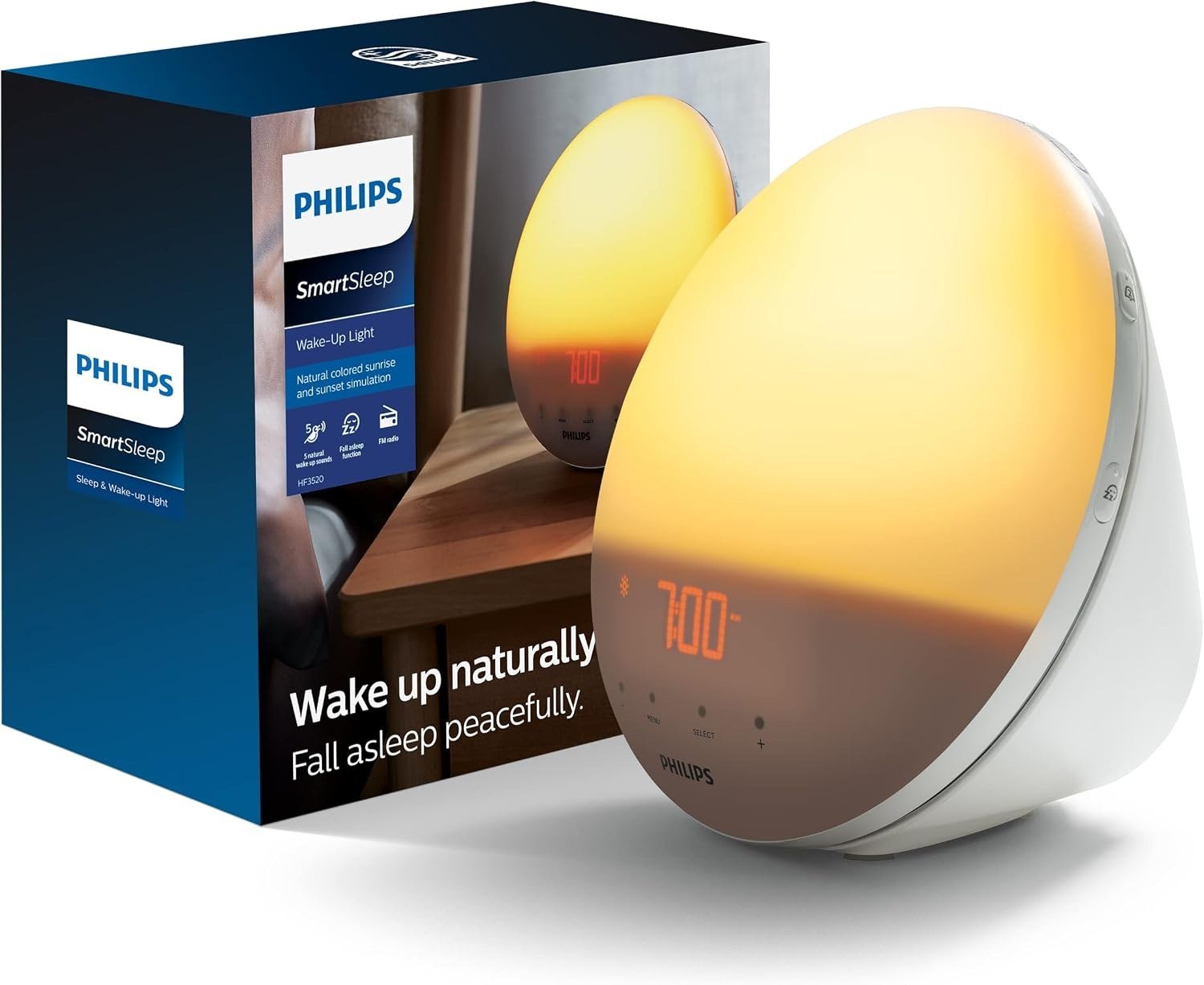
Philips SmartSleep Wake-Up Light HF3520/60
The Philips HF3520/60 is a dedicated wake-up lamp that brightens over 30 minutes through red, orange and yellow to a stated 300 lux, then plays one of five natural sounds or FM radio. It has a tap-to-snooze top, a sunset dimming mode and a reading-lamp function, and it needs no app. It suits people who want light as the wake cue and nothing to configure. It is an older design with a dated display and no white-noise library.
This phase-shifting using bright light therapy is critical for anchoring your circadian rhythm early in the day, ensuring your SCN knows exactly when morning has arrived.
The Hormonal Seesaw: Cortisol Awakening Response (CAR) and Melatonin
Your circadian rhythm governs the release of two crucial hormones that act like a seesaw throughout the 24-hour day: melatonin and cortisol. When one is high, the other should be low.
Cortisol and the CAR: Often unfairly demonized by the wellness industry as the "stress hormone," cortisol is actually essential for life, alertness, and focus. In a healthy, robust circadian rhythm, cortisol levels are at their lowest point around midnight and begin to gradually rise in the early morning hours, preparing you for the day. This culminates in the Cortisol Awakening Response (CAR), a sharp, dramatic spike in cortisol production that occurs within the first 30 to 45 minutes after you open your eyes.
The CAR is your body's natural cup of coffee; it increases blood pressure, mobilizes energy stores (glucose) from the liver, and prepares your brain to face the demands of the day. If you struggle to wake up, feel groggy for hours, or rely on three cups of coffee just to function, your CAR might be blunted, delayed, or dysregulated. Viewing morning sunlight is one of the most effective ways to optimize the CAR.
Melatonin: The Vampire Hormone: On the other end of the hormonal seesaw is melatonin, often called the "vampire hormone" because it is only secreted in the dark. Melatonin is produced by the pineal gland, a small pea-sized gland deep in the brain, but it only produces melatonin when the SCN gives it permission. The SCN only gives permission when there is an absence of bright blue light hitting the melanopsin in your eyes.
Contrary to popular belief, melatonin does not act like a sedative or a sleeping pill; it does not knock you out. Instead, it acts as a timing signal to the rest of the body that it is time to transition into sleep mode. It helps lower core body temperature and facilitates the physiological shift into slumber. This is why looking at bright screens late at night is so devastating to sleep: it fools the SCN into thinking the sun is still up, halting melatonin production and delaying your sleep onset.
Sleep Pressure: The Role of Adenosine and Sleep Inertia
While the circadian rhythm (Process C) acts as a biological clock dictating *when* you should sleep, another distinct biological force dictates *how much* sleep you need. This is known as sleep pressure, or Process S, and it is chemically driven by a molecule called adenosine.
From the very moment you wake up in the morning, adenosine begins to accumulate in your brain. It is a byproduct of cellular energy consumption—specifically the breakdown of ATP (adenosine triphosphate), the primary energy currency of the cell. The longer you are awake and the more active your brain is, the more adenosine builds up in the extracellular space of the brain. This accumulating adenosine binds to specific adenosine receptors, actively inhibiting wake-promoting neurons in the basal forebrain and stimulating sleep-promoting centers. The result is an overwhelming, growing urge to sleep.
When you finally go to sleep, your brain uses that time to clear out this built-up adenosine. If you get a full, high-quality eight hours of sleep, you wake up with empty adenosine receptors, feeling refreshed and ready to start the cycle again. However, if you shortchange your sleep and only get five hours, you wake up with residual adenosine still attached to those receptors. This results in immediate, profound sleepiness upon waking, a state referred to as sleep inertia.
Managing sleep inertia is critical for establishing a successful morning routine. If you constantly rely on the snooze button, dragging yourself out of bed in a fog, you are likely suffering from chronic sleep inertia and might want to explore the science of waking up and breaking the snooze cycle. A smart sleep assistant can help ease this transition by providing customized light and sound routines that respect your body's natural waking process and help clear sleep inertia gently.
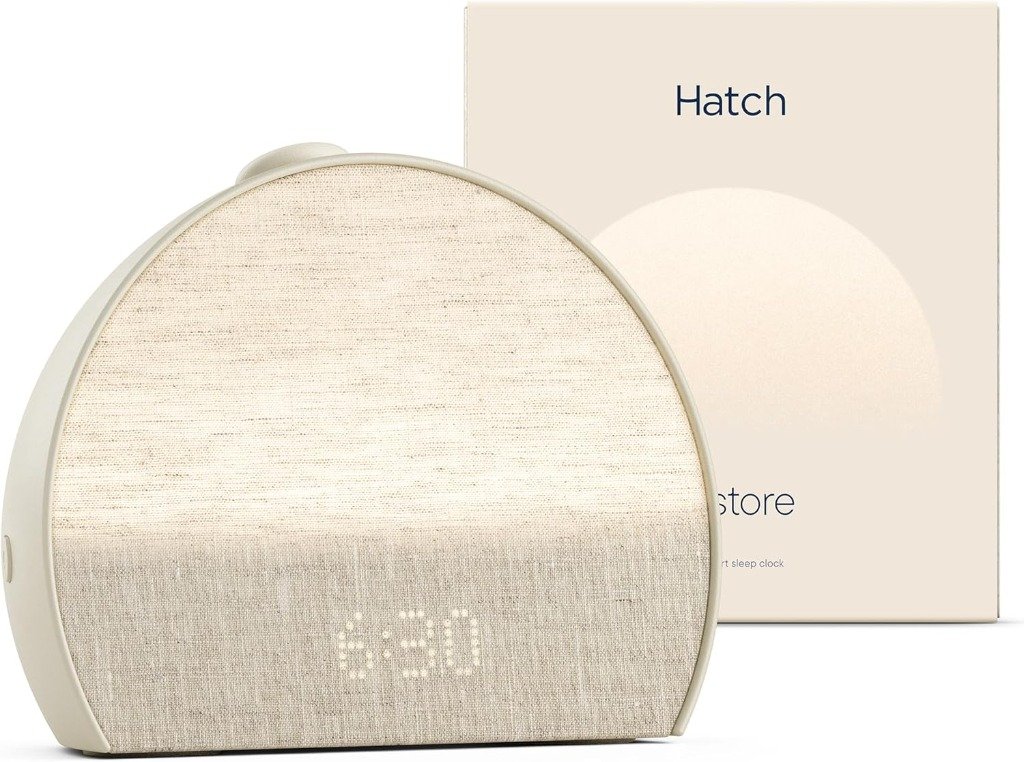
Hatch Restore 3 — Putty
The Hatch Restore 3 combines a colour sunrise/sunset light, a sound library and a phone-free clock face with a large snooze/off button. Set-up needs the Hatch app and Wi-Fi; nightly use does not. Around forty sounds, routines and alarms are free; Hatch+ adds more content for a monthly fee. It suits people building a phone-free bedtime and wake routine who want light and sound scheduled together. It is not a tracker, and the subscription is easy to sign up for during set-up.
It is also vital to understand how caffeine interacts with this system. Caffeine, the world's most popular psychoactive drug, works primarily as an adenosine receptor antagonist. Its molecular structure is similar enough to adenosine that it can fit into the adenosine receptors, but it doesn't activate them. Instead, it blocks them, preventing the actual adenosine from binding.
Caffeine doesn't eliminate the adenosine; it merely prevents your brain from feeling its sleep-inducing effects. While the caffeine sits in the receptors, the adenosine continues to build up in the background. Once the liver eventually metabolizes the caffeine and it unbinds from the receptors, all that accumulated adenosine rushes in at once, leading to the dreaded mid-afternoon caffeine crash. Understanding the caffeine half-life and when to have your last coffee is crucial for preventing caffeine from lingering in your system and interfering with your evening melatonin production.
Chronotypes: Are You a Bear, Wolf, Lion, or Dolphin?
We have discussed the universal mechanics of the circadian rhythm, but it is important to recognize that not everyone's internal clock is set to the exact same timezone. We all have a genetic predisposition toward a certain timing of sleep and wakefulness, known as our chronotype. This determines whether you are naturally a morning person, an evening person, or somewhere in between.
Sleep specialist Dr. Michael Breus popularized the concept of chronotypes by categorizing them into four distinct animal profiles:
1. Lions (Early Birds): Making up about 15-20% of the population, Lions naturally wake up before dawn, are highly productive and alert in the early morning, and feel their energy drop significantly by early evening. They rarely struggle to wake up but struggle to stay awake at social events late at night. 2. Bears (The Majority): Comprising about 50-55% of the population, Bears have a circadian rhythm that closely follows the solar cycle. They naturally wake up around 7:00 AM to 8:00 AM, experience a noticeable mid-afternoon slump between 2:00 PM and 4:00 PM, and generally prefer to go to sleep around 11:00 PM. 3. Wolves (Night Owls): Making up about 15-20% of the population, Wolves struggle immensely to wake up early. Their biological clock runs later than average. They hit their productivity and creativity peak in the late afternoon or evening, and naturally want to stay up well past midnight. 4. Dolphins (Insomniacs): Making up the remaining 10%, Dolphins are typically light sleepers with erratic sleep schedules. They are often characterized by high anxiety, low sleep drive, and a hypersensitive nervous system that makes deep, restorative sleep elusive.
Fighting your chronotype is a recipe for chronic fatigue and misery. If you are a natural Wolf forcing yourself to wake up at 5:00 AM for an early morning workout or a corporate job, you are constantly working against your underlying biology. Over time, this leads to severe health consequences. Tracking your biometric data over time is the absolute best way to intimately understand your natural chronotype, resting heart rate, and heart rate variability (HRV) patterns, allowing you to optimize your schedule around your biology rather than the other way around.
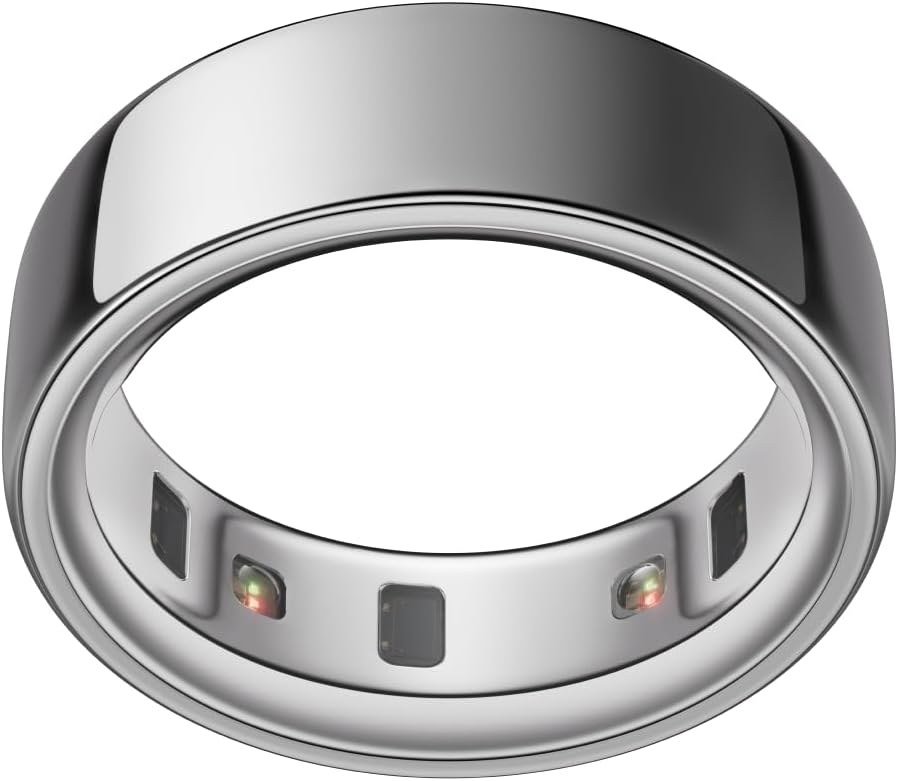
Oura Ring 4
The Oura Ring 4 is a titanium smart ring with red, infrared and green optical sensors, a temperature sensor and an accelerometer, running five to eight days per charge. It suits people who want sleep, readiness and temperature trends without wearing a screen to bed. The catch is a membership — roughly six dollars a month, per Oura — without which the app is limited, and the Amazon link resolves to one specific size and colour.
Morning-light and tracking block
Use a consistent light cue when natural morning light is limited.
-
Philips SmartSleep Wake-Up Light HF3520/60
Best for
People who wake in the dark and want a bright, gradual light before the alarm, with nothing to set up or subscribe to.
What it does well
- A published brightness — 300 lux at the top of 20 settings — which neither Hatch nor Loftie states
- A 30-minute coloured sunrise that reaches full brightness before the sound, which is the whole idea of a wake light
Trade-offs
- A design that predates the current generation: the display and menus feel dated
- Five nature sounds and FM radio only — no white-noise library, no Bluetooth
-
Hatch Restore 3 — Putty
Best for
People building a phone-free wind-down and wake routine who want light, sound and alarm scheduled as one thing.
What it does well
- Light and sound are scheduled together in one bedtime and wake routine, which is the whole point of the category
- A large physical button and clock-face controls mean the phone stays out of the bedroom after set-up
Trade-offs
- Set-up requires the app, Wi-Fi and — per Hatch's own support pages — starting a free Hatch+ trial you then have to cancel
- Hatch+ ($4.99 a month or $49.99 a year per Hatch) is where the larger sound library, stories and meditations live
-
Oura Ring 4
Best for
People who want long-term sleep and recovery trends without a screen on the wrist, and who will keep a membership.
What it does well
- No screen and no buzzing: nothing on the wrist to glance at when you wake at 3 a.m.
- Five to eight days per charge (Oura), so it is worn to bed every night rather than left on a charger
Trade-offs
- Membership: $5.99 a month or $69.99 a year per Oura; without it the app is restricted
- Sleep-stage estimates from a finger are estimates — useful for trends, not a diagnosis of anything
After the section on a fixed wake time and morning light; tracking tools may appear after the 1-2 week experiment.
Social Jetlag: The Modern Epidemic Destroying Our Rhythms
One of the most insidious and destructive forces acting on our circadian rhythms in the modern world is a phenomenon known as "social jetlag." This occurs when there is a persistent mismatch between your internal biological time (determined by your chronotype and SCN) and your external social time (dictated by work schedules, school start times, social events, and alarms).
The most common manifestation of social jetlag is the disparity between weekday and weekend sleep schedules. For example, if you force yourself to wake up at 6:30 AM Monday through Friday for work, but you naturally sleep in until 10:30 AM on Saturday and Sunday to "catch up" on the sleep debt you accumulated during the week, you are aggressively shifting your biological clock by four hours every single week.
Your body experiences this massive shift exactly as if you were boarding a plane and flying from New York to Los Angeles every Friday night, and then flying back to New York every Sunday night. You are putting your body through the physiological stress of transcontinental travel on a weekly basis, without ever leaving your bedroom.
This constant shifting wreaks havoc on your metabolism, your endocrine system, your mood, and your cognitive function. It has been linked to an increased risk of obesity, type 2 diabetes, cardiovascular disease, and depression. The key to fixing social jetlag is brutal consistency. If you need to know how to reset your sleep schedule after a disastrous weekend, the absolute first rule is to anchor your wake time. You must wake up at the exact same time on Sunday morning as you do on Wednesday morning, regardless of how poorly you slept the night before or how late you stayed out. Consistency is the anchor for the SCN.
Temperature as a Potent Zeitgeber
While light is universally recognized as the primary "zeitgeber" (a German word meaning "time-giver" or synchronizer) for the master clock in the SCN, temperature is a powerful secondary zeitgeber. Your core body temperature is not a static 98.6°F (37°C). It fluctuates in a highly predictable sine wave pattern by about 2 to 3 degrees Fahrenheit over a 24-hour circadian period.
Your core body temperature reaches its lowest point, known as the temperature nadir, around two hours before your natural, unforced wake time (usually around 4:00 AM to 5:00 AM for a typical Bear chronotype). From that point, your temperature begins to rise, triggering wakefulness, and peaks in the late afternoon.
In order to fall asleep quickly and stay deeply asleep, your core body temperature must drop by about 1 to 3 degrees Fahrenheit. If your core temperature cannot drop, you will suffer from insomnia. This is why a cool bedroom (universally recommended to be around 65°F or 18°C) is essential for optimal sleep architecture.
Conversely, actively warming your body in the morning—through a warm shower, exposure to sunlight, or morning exercise—can send a strong signal to your circadian rhythm that it is time to be alert. In the evening, a common but highly effective biohack is to take a hot bath or sauna 90 minutes before bed. This seems counterintuitive—shouldn't you want to be cold? However, taking a hot bath draws massive amounts of blood from your core to the surface of your skin. When you step out of the bath into a cool room, that heat rapidly dissipates into the environment, causing your core body temperature to plummet, which effectively mimics the natural circadian temperature drop and facilitates rapid sleep onset.
The Role of Food and Digestion in Peripheral Clocks
As mentioned earlier, while the SCN is the master clock, every organ in your body has its own peripheral clock. The liver, the pancreas, the gut microbiome, and the digestive tract all operate on circadian rhythms. While the SCN is primarily entrained by light, these peripheral clocks in the digestive system are primarily entrained by food intake.
When you eat, you signal to your liver and pancreas that it is daytime and time to metabolize nutrients. If you eat late at night, close to bedtime, you are sending conflicting signals to your body. Your SCN, sensing darkness, is telling the body, "It's night, shut down, produce melatonin." But your digestive system, sensing a massive influx of glucose and lipids from a late-night meal, is shouting, "It's daytime, we need to process this energy!"
This chronodisruption—the uncoupling of the central clock from the peripheral clocks—is a major driver of metabolic dysfunction. It impairs insulin sensitivity and can lead to weight gain. To optimize your circadian rhythm, it is highly recommended to restrict your eating window to daylight hours (e.g., 8:00 AM to 6:00 PM) and completely avoid consuming calories at least three hours before your intended bedtime.
The Strategic Use of Naps in a Circadian Framework
Many people experience a natural dip in alertness in the mid-afternoon, typically between 1:00 PM and 3:00 PM. This is often mistakenly attributed exclusively to a heavy lunch (the "food coma"), but it is actually a deeply ingrained part of our circadian biology. In many cultures, this circadian dip is embraced with a siesta.
Napping can be an incredible tool for cognitive enhancement, memory consolidation, and restoring alertness. However, naps must be deployed strategically and timed correctly, otherwise, they will destroy your nighttime sleep drive (by prematurely clearing out the adenosine buildup we discussed earlier) and lead to nighttime insomnia.
If you are going to nap, you generally have two options to avoid waking up groggy: 1. The Power Nap (20-30 minutes): This keeps you in the lighter stages of NREM (Non-Rapid Eye Movement) sleep. You gain the benefits of increased alertness and reduced sleep pressure without entering deep sleep, making it easy to wake up and get back to work. 2. The Full Cycle Nap (90 minutes): This allows you to complete a full sleep cycle, passing through light sleep, deep slow-wave sleep, and REM sleep, before waking up at the natural end of the cycle.
Anything in between (e.g., a 60-minute nap) runs the severe risk of waking up right in the middle of deep, slow-wave sleep. Waking from deep sleep results in severe sleep inertia, leaving you feeling worse and more disoriented than before you laid down. For more profound details on the physiological impacts of daytime sleeping and how to optimize it, read the surprising truth about naps.
Tracking Your Strain, Recovery, and Circadian Alignment
To truly master your circadian rhythm and wake up energized, you need objective data. Relying on subjective feelings of fatigue is often inaccurate. You need to know how the timing of your sleep, the intensity of your workouts, the stress of your daily life, and even your alcohol consumption are impacting your autonomic nervous system.
Tracking your cardiovascular strain and your overnight recovery against your natural rhythm provides invaluable insights into whether your lifestyle is genuinely aligned with your biology. By monitoring metrics like resting heart rate, respiratory rate, and sleep staging, you can make informed, data-driven decisions about when to push hard and when to rest.
A Master Protocol: Actionable Steps to Align Your Circadian Rhythm
Now that we have covered the deep science of the SCN, melanopsin, adenosine, and chronotypes, how do we put this into practice? Here is a comprehensive protocol to fix your broken circadian rhythm and banish morning fatigue forever:
1. The Anchor Wake Time: Choose a wake time that is realistic for your lifestyle and stick to it seven days a week. No sleeping in on weekends. This is the foundation of circadian health. 2. Immediate Morning Sunlight: Within 60 minutes of waking, go outside and get natural sunlight in your eyes for 10 to 30 minutes. Do not wear sunglasses. If it is dark, use a bright 10,000 lux SAD lamp. 3. Delay Caffeine: Wait 90 to 120 minutes after waking before consuming your first cup of coffee. This allows your natural cortisol awakening response to peak and clears out any remaining adenosine, preventing the afternoon crash. 4. Move Your Body Early: Exercise in the morning or early afternoon. Late-night vigorous exercise spikes core body temperature and cortisol, delaying sleep onset. 5. Implement an Eating Curfew: Stop eating all food and consuming alcohol at least three hours before bed to allow your core temperature to drop and peripheral clocks to synchronize. 6. The Digital Sunset: At least 90 minutes before bed, dim the overhead lights in your house. Switch to warm, amber-colored lamps. Put away smartphones, tablets, and laptops, or use blue-light-blocking glasses if screen time is unavoidable. Allow your brain to naturally produce melatonin. 7. Optimize the Sleep Environment: Make your bedroom a cave. It should be pitch black (use blackout curtains), quiet, and cool (around 65°F).
Conclusion: Working with your body clock
By deeply understanding the intricate, beautiful dance of the Suprachiasmatic Nucleus, the ipRGCs, cortisol, melatonin, and adenosine, you can transition from feeling like a helpless victim of your own fatigue to being the absolute master of your energy levels.
Aligning with your circadian rhythm is not a biohack; it is a return to what our bodies are built for. For millions of years, our ancestors evolved in strict adherence to the light and dark cycles of the rotating Earth. It is only in the last century, with the advent of artificial lighting and digital screens, that we have severed this ancient connection, and we are paying the price in the form of chronic exhaustion, metabolic disease, and cognitive decline.
Respect your chronotype. Protect your light environment. Anchor your sleep schedule. When you align your lifestyle with the deeply ingrained programming of your circadian rhythm, you gain a level of sustained, natural energy and focus that caffeine and willpower could never replicate. You will finally understand the secret to waking up energized, day after day.

Join the conversation
Questions and experiences are welcome. Every comment is read by a person before it appears, and your email address is never published.
No comments yet — yours would be the first.