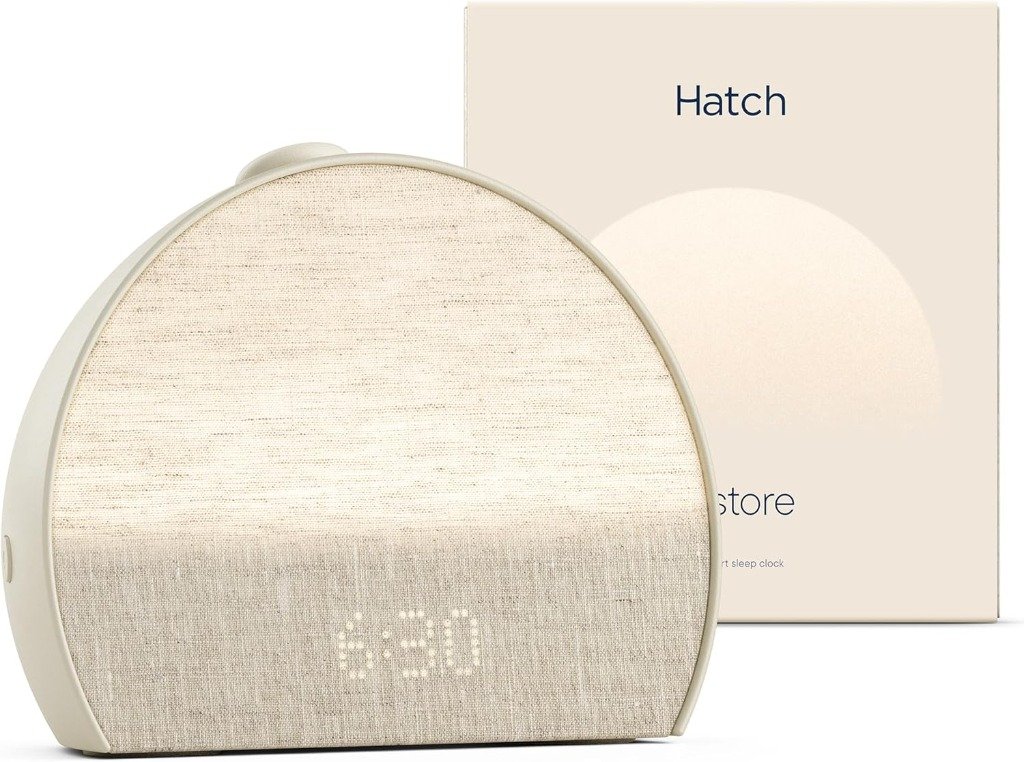
You want sleep sounds and a scheduled routine with the light.

Wake-Up & Circadian Tools · Philips
The plain wake light: a bright, gradual sunrise with a published 300 lux, no app, no account, no subscription.
Opens in a new tab · this page stays open · HF3520/60 listing
Affiliate link. As an Amazon Associate, SleepOriginal earns from qualifying purchases, at no extra cost to you. Amazon sets prices and availability and changes them often, so we link to the listing rather than quote a figure that may be wrong by the time you read it. How this works.
Quick verdict
The Philips HF3520 is the wake light for people who want a wake light. It brightens over half an hour to a published 300 lux — the one figure the newer devices do not give you — then plays one of five sounds or the radio, and it is all set on the device with no app, account or subscription. It also dims as a sunset and doubles as a reading lamp. Where it shows its age is everything else: a dated display, no sound library, no Bluetooth. If light is your wake cue, this is the honest choice; if sound and routine matter more, the Hatch or Loftie.
At a glance
Only verified fields are shown. Anything not listed was not confirmed from manufacturer documentation.
The problem it addresses
Waking in the dark is unpleasant and, in winter, unavoidable. A lamp that brightens gradually before the alarm gives the body the cue the sun would give in summer, and it makes the alarm itself less of a jolt because you are already surfacing when it sounds.
The HF3520 exists as the straightforward version of that lamp: bright enough, gradual enough, with a snooze you tap and nothing to log into. It has outlasted several generations of smarter devices because it does one thing without asking anything.
Design & usability
300 lux at maximum across 20 settings, brightening over 30 minutes through sunrise colours. Bright enough to fill a bedroom; not a therapy lamp. The published figure is why it is comparable and the others are not.
Five natural sounds and FM radio as the alarm. For sleep sounds through the night, it is not a contender.
Dims over 5–60 minutes. A useful wind-down cue that costs nothing to set up.
Tap the top to snooze; menus on the device. Functional and dated; you will learn it in an evening and never think about it again.
None. No app, no Wi-Fi, no account. The clock will do in ten years what it does today.
A round lamp face on a stand, larger than a compact clock. Angle is fixed; place it where the light reaches your face.
Specifications
| Light | 20 brightness settings; 300 lux maximum (Philips) |
|---|---|
| Sunrise | 30-minute coloured simulation, red to orange to yellow (Philips) |
| Sunset | 5–60 minute dimming (Philips) |
| Sounds | 5 natural sounds; FM radio (Philips) |
| Extras | Reading lamp; tap snooze; auto-dimming display (Philips) |
| Connectivity | None |
| Model | HF3520/60 |
Specifications are taken from the manufacturer's documentation and were checked on 14 Sep 2026. Variants and revisions differ — confirm on the listing before ordering.
Practical setup
The light only works if it reaches your closed eyes; a lamp facing the wall wakes the wall.
Twenty settings; most people settle around the middle after a week.
A 30-minute dim is a wind-down cue that also lowers evening light exposure.
The sunrise helps most when it arrives at the same time every morning.
Trade-offs
Buyer fit
Alternatives in the SleepOriginal catalogue
| Product | Best for | Standout | Main trade-off | |
|---|---|---|---|---|
| Philips SmartSleep HF3520 (this review) | Dark-morning wakers who want light as the cue and nothing connected. | A 30-minute coloured sunrise to a published 300 lux, with no app. | A dated design with only five sounds and FM radio. | Amazon ↗ |
| Hatch Restore 3 | Phone-free bedtime and wake routines with light and sound scheduled together. | One device that runs the wind-down, the night sound and the sunrise from a physical button. | App set-up with an opt-out trial, and the best content behind Hatch+. | Amazon ↗ |
| Loftie | Getting the phone out of the bedroom without signing up for anything. | Free core sounds, a no-Wi-Fi mode and a Bluetooth speaker in one small clock. | A modest light and speaker-only audio. | Amazon ↗ |
| NICETOWN blackout curtains | Bright bedrooms, streetlights, shift work, and couples where one person refuses a mask. | A light-blocking backing that stops light through the fabric itself. | Edge leakage is a hanging problem the curtain cannot solve for you. | Amazon ↗ |
Scroll sideways for the full table.
You want sleep sounds and a scheduled routine with the light.

You want a phone-free clock with sounds and a speaker and can live with a gentler light.

Your problem is light at the wrong time rather than darkness at the right one.
The SleepOriginal verdict
Choose the Philips HF3520 when light is the wake cue you want and connectivity is something you would rather not have by the bed. Its published brightness, gradual sunrise and complete independence from apps are the reasons it is still the reference wake light after years of newer competition.
Choose the Hatch or Loftie when sounds and routines matter more than the lamp. And keep expectations honest: dawn simulation is a gentler alarm and a support for a fixed wake time, not a treatment.
Questions
Philips states 300 lux at maximum with 20 brightness settings. That is bright enough to light a dark bedroom at the end of the sunrise; it is not a light-therapy lamp, which typically runs to 10,000 lux.
Over 30 minutes the lamp brightens from a dim red through orange to bright yellow-white, reaching your chosen level at the alarm time, when a sound or the radio starts. You wake to a lit room rather than a dark one.
No. Everything is set on the device. That is its main advantage over the Hatch, and the reason it is the choice for anyone who wants nothing connected by the bed.
Some studies suggest gradual light before waking reduces grogginess and eases getting up, especially in winter; effects are modest and vary by person. The strongest case is practical: light is a gentler cue than a loud tone, and a fixed daily sunrise supports a consistent wake time.
Yes — it has a reading-lamp mode, and the sunset function dims it gradually over 5 to 60 minutes as a wind-down cue.
Philips for the brighter, published-lux light and zero app involvement. Hatch for scheduled sleep sounds, a bedtime routine and a modern app. If you want both bright light and sounds, you may end up with the Philips plus a separate sound machine.
SleepOriginal provides general educational information and is not a substitute for medical advice, diagnosis, or treatment. Persistent sleep difficulty, loud snoring or breathing pauses, severe daytime sleepiness, or symptoms affecting safety should be discussed with a qualified healthcare professional.
Sources & verification
Product facts come from manufacturer documentation; scientific context from the sources listed; everything else is SleepOriginal's editorial judgement and is labelled as such.
About SleepOriginal reviews. SleepOriginal is an independent sleep-education site that reviews sleep products from manufacturer documentation and named sources; it does not sell the products it reviews and gives no score to a product it has not used. All product reviews · About the author.
Availability and pricing sit with Amazon and change without notice. The link opens the current listing so you can check today's details for yourself.
Check price on Amazon →As an Amazon Associate, SleepOriginal earns from qualifying purchases. It never changes what we recommend or what we say about it. Read our policy.
Most sleep complaints come down to timing and light, not equipment. Try the seven small changes in the free guide first — if you still want this, it will work better.
Join the conversation
Questions and experiences are welcome. Every comment is read by a person before it appears, and your email address is never published.
No comments yet — yours would be the first.