
In the pursuit of optimal sleep, individuals often encounter a formidable adversary: the phenomenon of night sweats and general nocturnal overheating. Sleep, a fundamental biological necessity, is intrinsically linked to thermoregulation. As we transition from wakefulness to the deeper stages of sleep, our core body temperature naturally drops. However, environmental factors, bedding choices, and physiological variations can disrupt this delicate thermal balance, leading to uncomfortable and disruptive nights. Enter the cooling blanket, a marvel of modern textile engineering designed to mitigate these precise issues. This comprehensive review looks closely at the science, functionality, and efficacy of cooling blankets, exploring how they actively pull heat away from the body to foster a restorative sleep environment. We will unpack the complex thermodynamics that govern heat transfer in the bedroom, scrutinize the innovative fabrics that make cooling possible, and compare the merits of natural materials like bamboo against advanced performance synthetics. Furthermore, we will provide a meticulously detailed review of the top products on the market, including the highly acclaimed [[PRODUCT:breescape-cooling-comforter-blanket-queen-misty-gray]], analyzing its specific technological advantages. The goal of this extensive guide is not merely to list products, but to equip you with a profound understanding of how sleep microclimates function, thereby empowering you to make an informed decision that will fundamentally transform your nightly rest. By the end of this treatise, you will possess a comprehensive knowledge of heat dissipation mechanisms, moisture-wicking capabilities, and the long-term maintenance required to preserve the structural integrity and cooling efficacy of these specialized blankets.
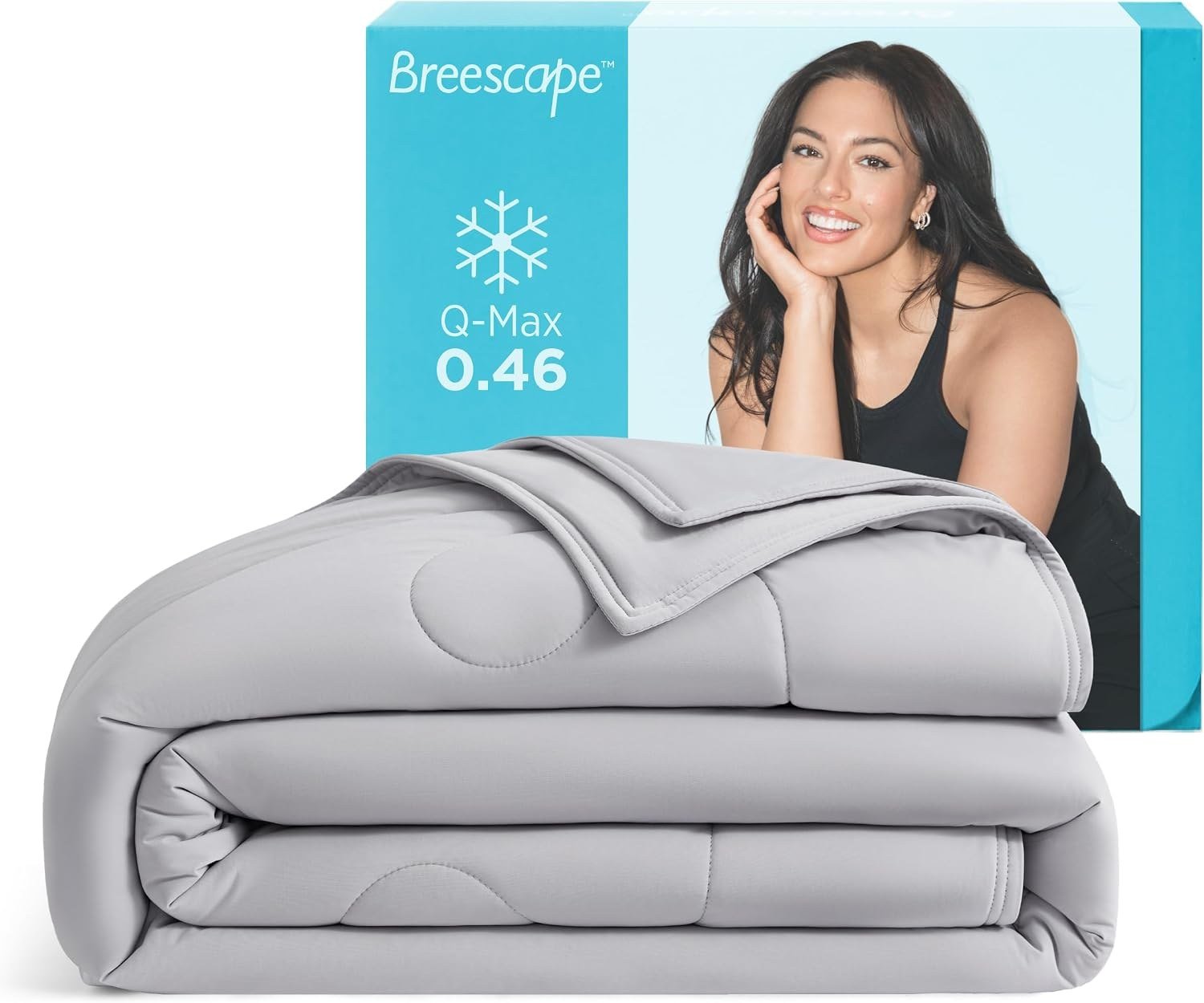
Breescape Cooling Comforter Blanket — Queen, Misty Gray
The Breescape is a lightweight summer comforter with a cool-to-the-touch face and a more breathable reverse, 96 × 96 inches in the Queen we link, machine washable. It suits hot sleepers who want to feel a difference the first night without buying a machine. Cool-touch fabrics feel cool because they conduct heat away on contact; the effect fades as the fabric warms, so it helps at bedtime more than it cools all night.
The Thermodynamics of Night Sweats
To truly appreciate the necessity and functionality of a cooling blanket, one must first comprehend the complex thermodynamics of the human body during sleep, particularly the mechanisms that lead to night sweats. The human body is essentially a biological furnace, continuously generating heat as a byproduct of metabolic processes. During waking hours, this heat is dissipated through a combination of radiation, conduction, convection, and the evaporation of sweat. However, when we retreat to our beds and ensconce ourselves in layers of bedding, we fundamentally alter the dynamics of heat transfer. The microclimate created beneath the covers can easily become a heat trap if the materials lack sufficient thermal conductivity or breathability.
As the body enters the initial stages of non-REM sleep, the hypothalamus—the brain's thermoregulatory center—initiates a lowering of the core body temperature, typically by 1 to 2 degrees Fahrenheit. This cooling process is essential for achieving deep, restorative slow-wave sleep. To facilitate this core temperature drop, the body increases peripheral blood flow, radiating heat from the skin to the surrounding environment. If the surrounding environment (i.e., the bed) is heavily insulated with traditional, non-breathable materials like dense down or standard polyester, the radiated heat cannot escape. It remains trapped, warming the air immediately surrounding the body.
Consequently, the body, sensing that its core temperature is not dropping as required, resorts to its secondary, more aggressive cooling mechanism: diaphoresis, or sweating. As sweat is excreted onto the skin, it requires energy (heat) to evaporate, thereby cooling the skin surface. However, evaporation can only occur efficiently if the ambient humidity within the microclimate allows for it. When trapped under non-breathable blankets, the humidity rapidly spikes, impeding evaporation. The sweat remains on the skin, causing discomfort, while the body continues to produce more sweat in a futile attempt to cool down, leading to the drenching experience known as night sweats.
Cooling blankets intervene directly in this thermodynamic crisis by enhancing the primary mechanisms of heat loss: conduction and convection. By utilizing materials with a high specific heat capacity and excellent thermal conductivity, these blankets actively draw heat away from the body more rapidly than traditional fabrics, preventing the initial accumulation of heat that triggers the sweating response. They effectively expand the thermal boundary layer, allowing the body's natural nocturnal cooling process to proceed uninterrupted, thereby preempting the physiological distress of overheating.
How Cooling Fabrics Actually Work
The efficacy of a cooling blanket is not derived from magic or refrigeration, but rather from the application of advanced materials science and textile engineering. Unlike traditional blankets designed to maximize thermal insulation by trapping air pockets, cooling blankets are engineered to maximize thermal dissipation and moisture management. Understanding how these fabrics actually work requires examining their physical properties at a microscopic level, specifically their thermal conductivity, moisture-wicking capabilities, and structural breathability.
Thermal conductivity refers to a material's intrinsic ability to transfer heat. Traditional bedding materials like wool or standard cotton have low thermal conductivity; they are insulators. Cooling fabrics, conversely, often incorporate materials with significantly higher thermal conductivity. When a material with high thermal conductivity comes into contact with the warmer human skin, heat flows rapidly from the body into the fabric. This creates an immediate sensation of coolness upon touch, often referred to as the "Q-max" value in textile science. However, initial coolness is insufficient for sustained sleep. The fabric must also possess a high specific heat capacity, meaning it can absorb a substantial amount of thermal energy before its own temperature rises significantly.
Beyond conductive cooling, moisture management is paramount. While conductive cooling prevents the initial onset of sweating, some degree of moisture production is inevitable during sleep. Cooling fabrics employ advanced capillary action to manage this moisture. These fabrics are woven using specialized fibers—often with non-circular cross-sections (like trilobal or cruciform shapes)—that create microscopic channels. When moisture (sweat) contacts these fibers, capillary action rapidly draws the liquid away from the skin and spreads it over a vast surface area on the exterior of the blanket.
This wide dispersion is crucial because the rate of evaporation is directly proportional to the surface area exposed to the air. By spreading the moisture thinly and broadly, the fabric facilitates rapid evaporation. The phase change of water from liquid to vapor consumes a significant amount of latent heat, drawing additional thermal energy away from the body and the microclimate. Thus, the fabric actively cools the sleeper through evaporative cooling, supplementing the initial conductive cooling. Furthermore, the structural weave of these blankets is deliberately open or porous, maximizing convective airflow. This continuous circulation of ambient air helps dissipate the absorbed heat and vaporized moisture into the broader bedroom environment, ensuring the blanket does not eventually saturate and become a heat trap itself.
Cooling-method comparison table
Choose the least complicated layer that addresses the main heat problem.
| Option | Best for | Consider something else if | Details |
|---|---|---|---|
| Breescape Cooling Comforter Blanket — Queen, Misty Gray | Hot sleepers who want an inexpensive, washable summer comforter that feels cool at bedtime. | You expect all-night cooling from a fabric, you want a warm winter duvet, or you prefer natural fibres. | |
| Pure Bamboo Sheet Set — 100% Viscose from Organic Bamboo, Queen | Warm sleepers who want a cool, silky sheet and will follow gentle care instructions. | You want crisp percale, maximum durability, or a genuinely organic textile. | |
| BedJet 3 Climate Comfort System | Hot sleepers and night-sweat sufferers in a moderately cool bedroom, and couples who cannot agree on bed temperature. | Your bedroom itself is hot, you have no floor space beside the bed, or a fan and cooler bedding have not yet been tried. | |
| YnM Weighted Blanket — 15 lb, 48 x 72 Inches, Dark Grey | First-time weighted-blanket buyers who want to test the feel affordably and will use a cover. | You run hot, you want to share the blanket, you have breathing or mobility concerns about heavy covers, or you expect a treatment. | |
| Dreo Nomad One Tower Fan — Black | Hot sleepers who want quiet, oscillating airflow across the bed with a fade-down sleep mode. | Your room is hot rather than stuffy and needs air conditioning, or you cannot tolerate any fan noise. |
After explaining breathable fabrics, airflow, and active cooling; follow with need-based product cards.
Bamboo vs. Performance Synthetics
When handling the market for cooling blankets, consumers invariably encounter a stark dichotomy in material choices: natural, plant-derived fibers—most notably bamboo-derived rayon or lyocell—versus advanced performance synthetics, such as specialized polyesters, nylon blends, or fabrics infused with highly conductive materials. Each category possesses distinct structural properties that influence its cooling mechanisms, durability, and overall tactile experience, necessitating a detailed comparison to determine the optimal choice for varying sleep profiles.
Bamboo-derived textiles have surged in popularity due to their exceptional softness, which often rivals or surpasses high thread-count cotton, and their inherent breathability. The process of converting bamboo pulp into fabric, particularly when utilizing the lyocell method (which is more environmentally sustainable than the traditional viscose process), yields fibers with a highly porous microscopic structure. This porosity endows bamboo fabric with superior moisture-wicking capabilities. It can absorb significantly more moisture than cotton before feeling damp, rapidly drawing sweat away from the skin. Furthermore, bamboo has a naturally smooth fiber profile, which minimizes friction and provides a luxurious, draping feel. Its cooling action relies heavily on its high breathability and rapid evaporative properties. Bamboo fabrics excel in warm, humid environments where managing perspiration is the primary concern, as they actively pull moisture away and allow air to circulate freely, preventing the stifling microclimate that causes night sweats.
On the other hand, performance synthetics are engineered from the molecular level upwards specifically for thermoregulation. Materials like ultra-high-molecular-weight polyethylene (UHMWPE) or specially extruded nylons are designed to possess exceptionally high thermal conductivity. These synthetic fibers often feel noticeably cool to the touch immediately upon contact. Unlike bamboo, which relies primarily on breathability and moisture wicking, performance synthetics focus aggressively on conductive heat transfer. They literally pull heat out of the body at a rapid rate. Some advanced synthetics also incorporate phase change materials (PCMs) encapsulated within the fibers. PCMs absorb heat as the body warms up, undergoing a phase transition (e.g., from solid to liquid at a microscopic level), and then release that heat if the body temperature drops, providing active temperature regulation. While synthetics may sometimes lack the plush, organic feel of bamboo, they offer unparalleled conductive cooling power, making them the superior choice for severe hot sleepers or those experiencing acute temperature spikes, such as during menopause.
Comprehensive Review of Top Cooling Blankets
The landscape of cooling blankets is diverse, with numerous brands asserting superiority in thermoregulation. A rigorous, comprehensive review requires evaluating these products across multiple vectors: cooling efficacy (both initial contact and sustained), moisture management, textural comfort, durability, and specific use-case suitability. Our analysis focuses on the leading contenders that utilize advanced material science to fundamentally alter the sleep microclimate.
A prime example of exceptional engineering in this space is the [[PRODUCT:breescape-cooling-comforter-blanket-queen-misty-gray]]. This product exemplifies the sophisticated integration of performance fabrics with thoughtful construction. The Breescape utilizes a proprietary cooling fabric blend designed to maximize both thermal conductivity and moisture-wicking. Upon initial contact, it delivers a pronounced, immediate cooling sensation, effectively drawing heat away from the skin. What distinguishes the Breescape, however, is its sustained performance. Many lesser blankets feel cool initially but rapidly equilibrate with body temperature, becoming insulators. The Breescape's highly breathable weave ensures that the heat it absorbs is continuously dissipated into the ambient air. Its moisture management is equally impressive; it swiftly capillary-wicks any perspiration, ensuring the sleeper remains dry. The misty gray Queen iteration provides generous coverage while maintaining a lightweight profile that offers the comforting drape of a standard comforter without the oppressive heat retention, making it an outstanding all-rounder for chronic hot sleepers.
Beyond the Breescape, other notable options leverage different technologies. Heavyweight cooling blankets, often incorporating glass beads for deep pressure stimulation alongside cooling fabrics, cater to those needing anxiety relief combined with temperature control. These rely on specialized, highly conductive covers to offset the insulating properties of the weighted core. Conversely, ultra-thin, hyper-conductive synthetic blankets (often utilizing Q-Max rated fibers exceeding 0.4) offer an almost icy touch, ideal for peak summer months or individuals running exceptionally hot, though they may lack the cozy heft some sleepers prefer. Bamboo-based options, as previously discussed, dominate the segment prioritizing extreme softness and eco-conscious manufacturing, excelling in evaporative cooling rather than sheer conductive heat draw. The optimal choice ultimately depends on whether the user prioritizes an icy initial touch, sustained moisture wicking, the reassuring weight of a comforter, or the silken drape of natural fibers, but the Breescape stands out for balancing these competing demands exceptionally well.
Maintaining the Cooling Effect Over Time
The acquisition of a high-quality cooling blanket is a significant investment in sleep hygiene; however, preserving its specialized thermoregulatory properties requires meticulous care. The very structural characteristics that enable cooling—the microscopic pores, the specialized polymer extrusions, and the delicate fiber weaves—are highly susceptible to degradation through improper laundering and maintenance. Failing to adhere to specific care protocols will inevitably result in a loss of thermal conductivity, diminished moisture-wicking capacity, and a shortened lifespan for the product.
The paramount rule for maintaining any cooling fabric is the strict avoidance of heat during the laundering process. High water temperatures during washing and, critically, high heat during drying, can cause synthetic cooling fibers to warp, melt at a microscopic level, or lose their specialized shape. This structural damage permanently impairs their ability to conduct heat or wick moisture. Furthermore, heat can degrade the delicate elastane or spandex fibers often woven into these blankets to provide stretch and drape. Therefore, cooling blankets must always be washed in cold water. Cold water effectively removes bodily oils and sweat without compromising the structural integrity of the advanced textiles.
Equally critical is the selection of detergent and the absolute prohibition of fabric softeners. Fabric softeners, whether liquid or dryer sheets, function by coating fibers with a layer of waxy lipids to reduce friction and increase perceived softness. For a standard cotton towel, this is desirable. For a cooling blanket, it is catastrophic. This waxy coating clogs the microscopic moisture-wicking channels and insulates the highly conductive fibers, effectively neutralizing the blanket's cooling mechanisms. Users must employ a mild, liquid detergent free of optical brighteners and heavy fragrances. Powdered detergents should be avoided as they may not fully dissolve in cold water, leaving abrasive residue within the weave.
Drying protocols require equal vigilance. Tumble drying on high heat is the fastest way to destroy a cooling blanket. If machine drying is necessary, it must be done on the lowest possible heat setting or, preferably, the "air fluff" cycle. However, the optimal method for preserving the cooling efficacy and structural integrity of the fabric is line drying in a shaded, well-ventilated area. Direct, intense sunlight should be avoided, as prolonged UV exposure can degrade synthetic polymers and cause discoloration in natural fibers like bamboo. By adhering strictly to cold water washing, eschewing fabric softeners, and utilizing gentle, heat-free drying methods, users can ensure their cooling blanket retains its vital thermoregulatory properties for years of comfortable, restorative sleep.
Conclusion
the mitigation of night sweats and nocturnal overheating is not merely a matter of comfort, but a critical component of achieving restorative, health-sustaining sleep. Cooling blankets represent a profound advancement in textile technology, moving beyond simple insulation to active thermoregulation. By understanding the thermodynamics of heat transfer and the precise mechanisms by which conductive and moisture-wicking fabrics operate, consumers can appreciate the sophisticated engineering embedded in these products. Whether opting for the highly efficient, moisture-managing properties of bamboo or the intense, conductive cooling of advanced performance synthetics, selecting the right material is paramount. Products like the [[PRODUCT:breescape-cooling-comforter-blanket-queen-misty-gray]] demonstrate how effective these technologies can be when properly integrated, offering sustained temperature regulation and exceptional comfort. Ultimately, by making an informed choice and committing to the stringent maintenance protocols required to preserve these specialized fabrics, individuals can reclaim their sleep microclimate, transforming their nights from a battle against heat into a period of profound, uninterrupted rest.

Join the conversation
Questions and experiences are welcome. Every comment is read by a person before it appears, and your email address is never published.
No comments yet — yours would be the first.