
Black Friday is 27 November this year, and for the next fortnight every sleep brand you have ever clicked will tell you that this is the week your sleep changes. Most of it will not. The honest version of this article is short: a handful of things are worth buying, a larger handful are worth buying only if a specific problem applies to you, and the rest is marketing.
Nothing here lists a price. A deal guide written two weeks early cannot know what anything will cost, and the ones that claim to are guessing. What follows is the part that does not change on the day — what is worth owning, and why.
Start with the free things, because they outrank the paid ones
This is not a trick to make the article look wholesome. The interventions with the strongest evidence behind them cost nothing: a fixed wake time, morning light, caffeine finished early enough, a dark and cool room, and a bedtime routine you will actually keep. If you have not done those, a purchase is unlikely to make up the difference, and you will conclude the product failed when the routine was never there.
If you have done them and you are still stuck, then the shopping list below is worth your attention, because at that point you are fixing a specific obstacle rather than buying a general hope.
The four categories worth looking at
Each of these has its own guide, written for the question rather than the sale:
- Mattresses and pillows — the biggest spend, and the one where a discount matters most
- Blackout and sound — masks, curtains, earplugs and white noise, where cheap often wins
- Sleep tech — trackers, rings and wake-up lights, where the useful ones are a minority
- Supplements — where the evidence is thinnest and the marketing loudest
How to tell a real discount from a staged one
The tactic is old and still works: raise a price in October, cut it in November, call the difference a saving. You do not need a tool to catch it, only the habit of checking. Look the product up a week before and write the number down. If a price has been "reduced" from a figure you never saw charged, it is not a reduction.
The other half is simpler. A discount on something you were not going to buy is not a saving, it is a purchase. The question is never "is this cheap", it is "would I buy this at this price in March".
What never makes the list
Anything promising deep sleep from a drink, a patch or a spray. Anything whose evidence is a testimonial. Anything that needs a subscription to keep working. And any gadget that asks you to look at a screen in the hour before bed, which is the opposite of what screens do to a sleepy brain.
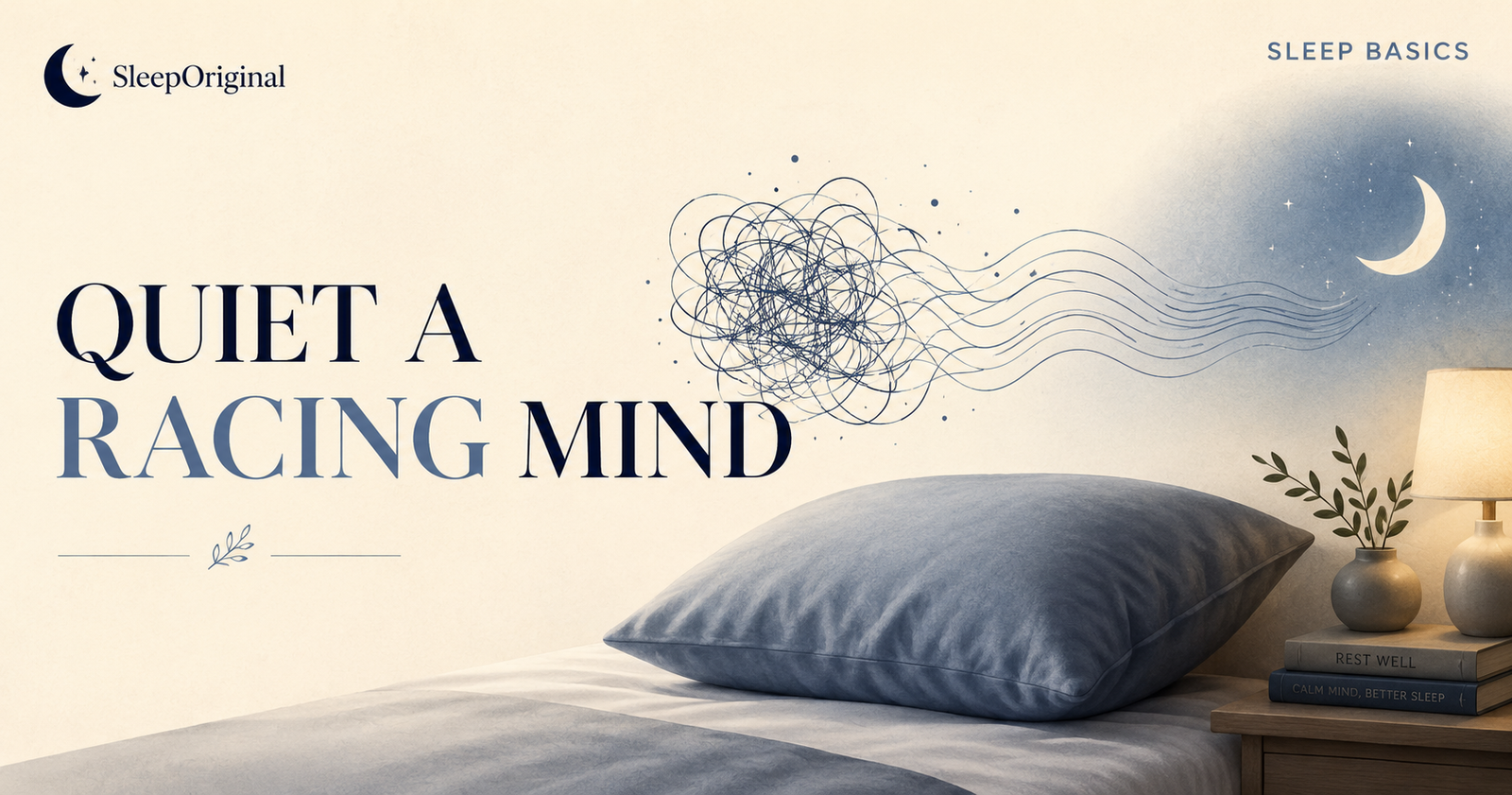
If your trouble is that you lie down and your mind starts up, no object on sale this month fixes that; a wind-down routine has a better record than anything with a plug.
Join the conversation
Questions and experiences are welcome. Every comment is read by a person before it appears, and your email address is never published.
No comments yet — yours would be the first.