
You want a worn, scheduled vibration cue rather than a light to follow, and accept charging and an app.

Relaxation & Pressure Tools · Dodow
A metronome for your breath: a pulsing light on the ceiling you breathe with for eight or twenty minutes, then it switches itself off.
Opens in a new tab · this page stays open · standard listing listing
Affiliate link. As an Amazon Associate, SleepOriginal earns from qualifying purchases, at no extra cost to you. Amazon sets prices and availability and changes them often, so we link to the listing rather than quote a figure that may be wrong by the time you read it. How this works.
Quick verdict
The Dodow Plus is a pacing device for slow breathing, which is one of the few wind-down techniques with decent evidence behind it. Its contribution is the cue: a soft light on the ceiling that gives a racing mind one thing to follow, slows the rhythm over 8 or 20 minutes, and switches itself off. For people who lie awake thinking, that can be the difference between a technique they know and one they actually do. It is not a treatment, the light itself bothers some people, and many users find they no longer need it after a few weeks — which is arguably the point.
At a glance
Only verified fields are shown. Anything not listed was not confirmed from manufacturer documentation.
The problem it addresses
Everyone knows slow breathing calms you down and almost nobody does it at 11 p.m. with a head full of tomorrow, because counting breaths is one more thing to think about. A light that breathes for you removes the counting: you follow it, it slows, you slow with it.
The Dodow exists as that light. It asks for nothing — no screen, no voice, no phone — and it goes out on its own, which is the one thing a phone app never does.
Design & usability
A single expanding and contracting light. Following it occupies the part of the mind that would otherwise be rehearsing the day. This is the mechanism, and it is simple enough to work or not within a week.
The rhythm slows across the cycle toward about six breaths a minute per Dodow, the rate most paced-breathing research uses. Whether you fall asleep before the end is individual.
Dim, blue, on the ceiling, for 8 or 20 minutes. Blue is the wavelength most associated with alertness at high intensity; here it is faint and brief, but light-sensitive people should note it.
The device ends the session itself. Nothing to switch off, no screen to wake you when it stops.
Guided content for people who want words. The device does not need the phone, and the phone in the bedroom undoes part of the benefit.
Many users learn the rhythm and stop using the device. Dodow frames this as success; buyers should expect it.
Specifications
| Function | Projects a pulsing light on the ceiling to pace breathing (Dodow) |
|---|---|
| Modes | 8-minute and 20-minute cycles; auto-off (Dodow) |
| Target rhythm | Slows toward ~6 breaths per minute (Dodow) |
| Power | 3 × AAA batteries, included per retail listings |
| App | Companion app with guided content (Plus version, listing) |
| Subscription | None per Dodow |
Specifications are taken from the manufacturer's listing and were checked on 14 Sep 2026. Variants and revisions differ — confirm on the listing before ordering.
Practical setup
Lie on your back so you can see the light without turning your head.
Inhale as it grows, exhale as it shrinks; let the exhale be the longer half.
Use 20 only if you regularly reach the end of the short cycle awake.
If you can pace yourself, the device has done its job.
Trade-offs
Buyer fit
Alternatives in the SleepOriginal catalogue
| Product | Best for | Standout | Main trade-off | |
|---|---|---|---|---|
| Dodow Plus (this review) | Busy-headed sleepers who want a wordless, screen-free breathing cue. | A single point of focus that paces your breathing and then turns itself off. | It is a light in a dark room, and it teaches a technique you may soon not need it for. | Amazon ↗ |
| Apollo Neuro | People who respond to physical cues and want an automated, screen-free wind-down. | Silent vibration patterns delivered by a wearable, scheduled automatically with the membership. | Thin independent evidence, daily charging, and a membership after year one. | Amazon ↗ |
| Hatch Restore 3 | Phone-free bedtime and wake routines with light and sound scheduled together. | One device that runs the wind-down, the night sound and the sunrise from a physical button. | App set-up with an opt-out trial, and the best content behind Hatch+. | Amazon ↗ |
| nodpod | Back sleepers who find gentle, even pressure calming and hate straps. | Four bead-filled pods and no strap at all. | It is held on by gravity, so it moves when you do. | Amazon ↗ |
Scroll sideways for the full table.
You want a worn, scheduled vibration cue rather than a light to follow, and accept charging and an app.
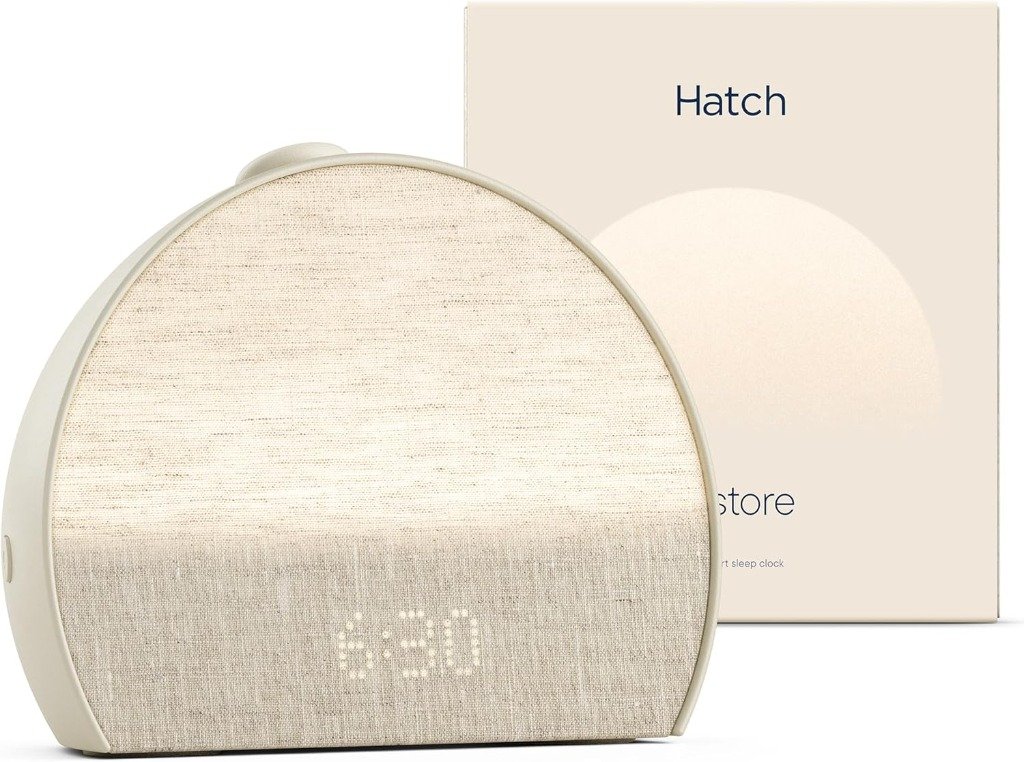
You want a bedside device that runs a whole wind-down and wake routine, with sound.

You want a physical, dark wind-down cue with no light at all.
The SleepOriginal verdict
Choose the Dodow when the problem is a head that will not stop and the solution you keep meaning to try is slow breathing. It is the least technological way to make that technique happen, it costs little, and it turns itself off.
Skip it if light in the bedroom bothers you, and do not buy it as a cure for insomnia — persistent insomnia has an evidence-based treatment, cognitive behavioural therapy for insomnia, and a breathing light is not it. Expect to outgrow the device; that is how it is supposed to go.
Questions
Tap it and a soft blue light appears on the ceiling, growing and shrinking in a slow rhythm. You breathe in as it expands and out as it contracts. Over the cycle the rhythm slows — Dodow describes reaching about six breaths a minute — and at the end of 8 or 20 minutes the light goes out. The idea is that slow breathing and a single point of focus make it easier to let go of thoughts.
Slow, paced breathing is a recognised relaxation technique with reasonable evidence for reducing arousal; whether a pacing light shortens time to fall asleep in the general population is less studied, and evidence for the Dodow specifically is limited. Treat it as a tool for a technique, not a treatment.
A companion app with guided content and exercises, per the listing. The device's core light function works without it.
For some people, yes. The glow is dim and only lasts the cycle, but a blue projection on the ceiling is the opposite of darkness. If you are light-sensitive at night, a breathing practice without the light — or a sound-based cue — may suit you better.
AAA batteries (three, included per retail listings). No cord and no charging.
The Dodow is a simple breathing pacer for the moments before sleep; the Apollo is a wearable that vibrates on a schedule and needs charging and an app. If you want the least technology and the lowest cost, the Dodow; if you want something worn and automated, the Apollo — with the caveat that evidence for both is limited.
SleepOriginal provides general educational information and is not a substitute for medical advice, diagnosis, or treatment. Persistent sleep difficulty, loud snoring or breathing pauses, severe daytime sleepiness, or symptoms affecting safety should be discussed with a qualified healthcare professional.
Sources & verification
Product facts come from manufacturer documentation; scientific context from the sources listed; everything else is SleepOriginal's editorial judgement and is labelled as such.
About SleepOriginal reviews. SleepOriginal is an independent sleep-education site that reviews sleep products from manufacturer documentation and named sources; it does not sell the products it reviews and gives no score to a product it has not used. All product reviews · About the author.
Availability and pricing sit with Amazon and change without notice. The link opens the current listing so you can check today's details for yourself.
Check price on Amazon →As an Amazon Associate, SleepOriginal earns from qualifying purchases. It never changes what we recommend or what we say about it. Read our policy.
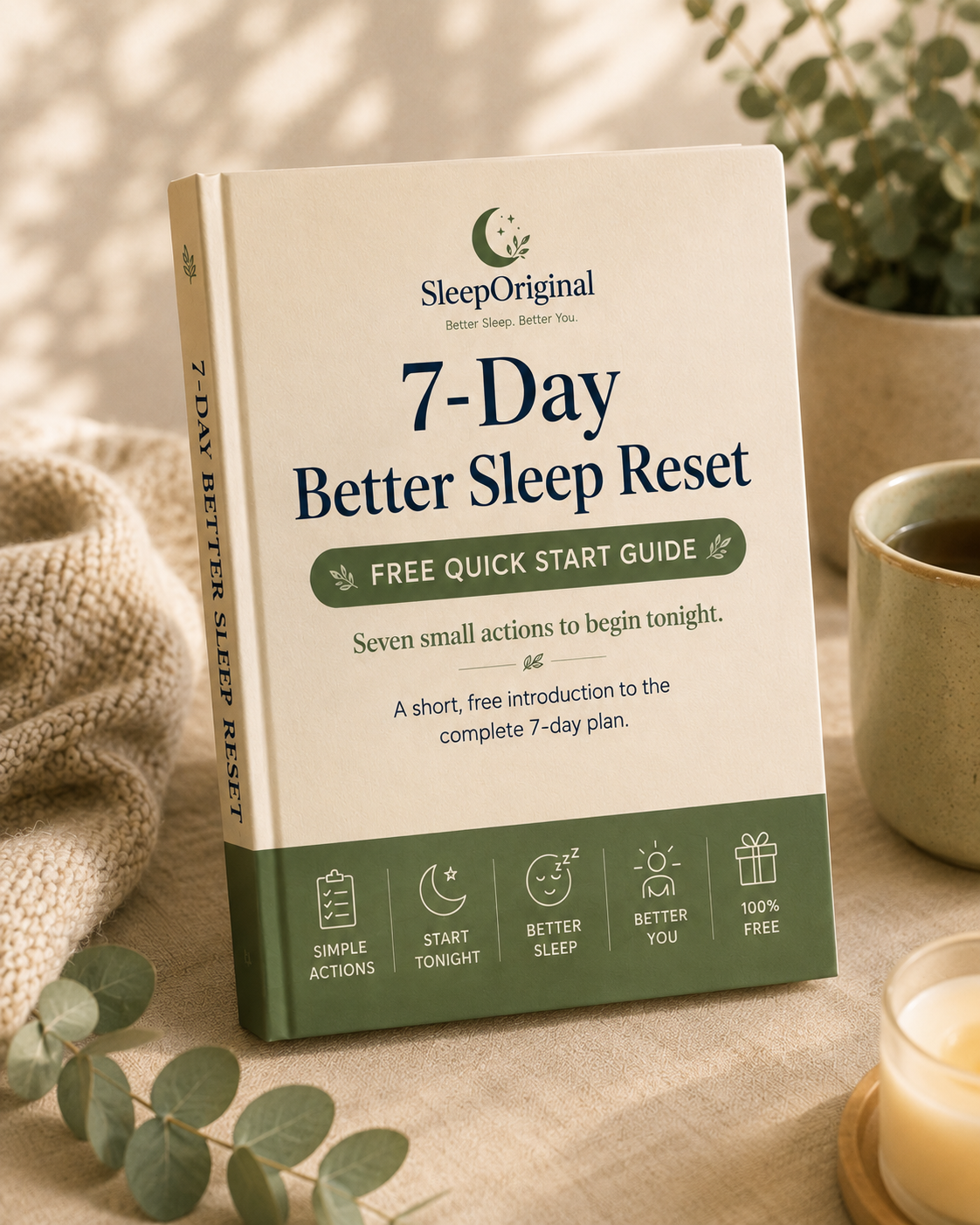
Most sleep complaints come down to timing and light, not equipment. Try the seven small changes in the free guide first — if you still want this, it will work better.
Join the conversation
Questions and experiences are welcome. Every comment is read by a person before it appears, and your email address is never published.
No comments yet — yours would be the first.