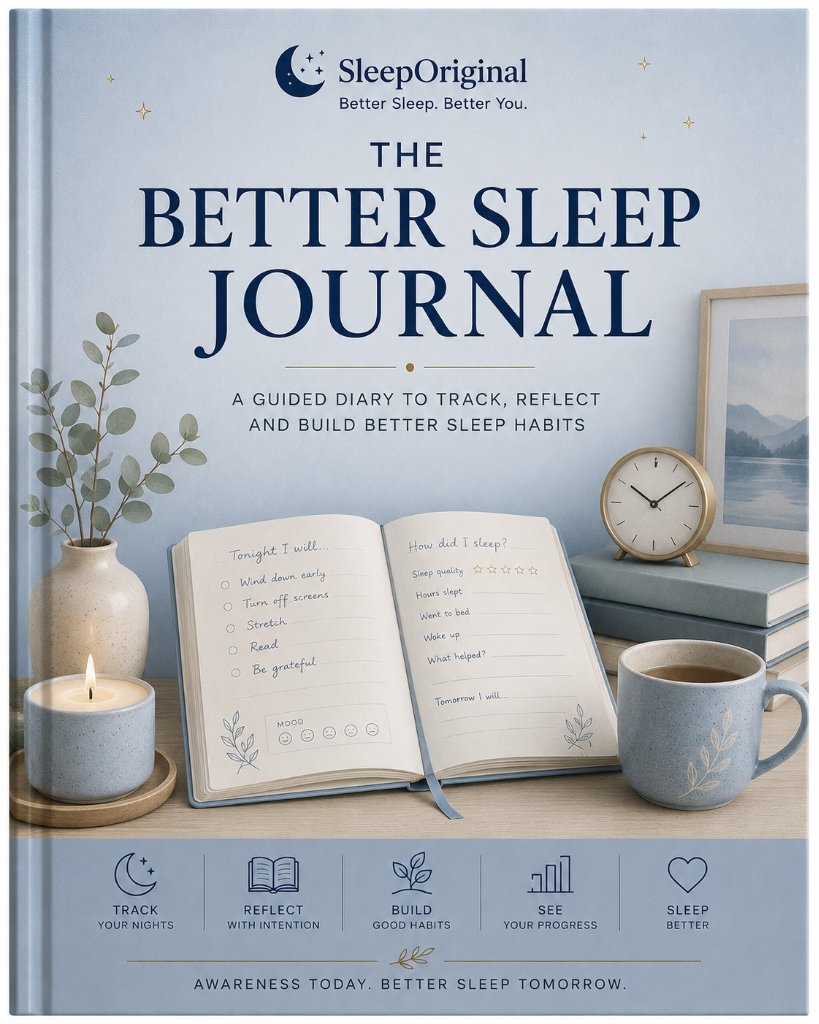
The Sleep Pattern Journal
30 Days to Notice What Helps, What Gets in the Way and What to Try Next
A guided 30-day journal for noticing your own sleep patterns: what helps, what gets in the way, and what is worth trying next. Observation rather than another programme to follow.
PDF, available instantly — read on any device or print it
Why you need this
- No device, subscription or battery
- Captures context a tracker cannot, like stress and caffeine
- Guided prompts rather than thirty identical blank pages
- Good companion to either of the plans
What's included
- A guided 30-day journal with a different purpose each week
- Daily prompts that record context, not just hours slept
- A baseline week for establishing what your normal looks like
- A structured experiment week, changing one variable at a time
- Guidance on observing without tipping into unhelpful monitoring
- The Sleep Pattern Map summary you complete at the end
- A closing section on what to stop tracking, and when
- Delivered as a printable PDF to your Download Hub, straight after checkout
The Deep Dive
Finding patterns, not scoring nights
A sleep tracker gives you a number. It does not tell you that the bad nights were the ones after a late meeting, or that the good week was the week you walked to work. Those are patterns, and patterns need context that only you can record.
This is a guided journal rather than a book of blank tables. Each week has a purpose, and the prompts change as you go.
How to observe without obsessing
The first section is about the risk in this kind of exercise. Watching your sleep closely can make it worse, and the guide is explicit about the line between useful attention and counterproductive monitoring — including how to tell when you have crossed it and what to do then.
Four weeks, four jobs
Week one you simply notice, recording without changing anything, to establish what your normal actually looks like. Week two you run small experiments, one variable at a time. Week three you compare, looking back across three weeks of your own data for what repeats. Week four you personalise, turning what you have found into something you would keep doing.
Your sleep pattern map
The journal ends with a summary page: the things that reliably help you, the things that reliably get in the way, and the ones that turned out not to matter. That last column is the useful one nobody expects — most people are carrying two or three sleep rules that do nothing for them.
What to stop tracking
A short closing section on winding the exercise down. The goal is a finished map and a habit or two, not a permanent logging obligation.
What this guide is, and is not
This is educational material. It explains what is known about everyday sleep behaviour and gives you a way to apply it, and it is written by a writer rather than a clinician. It does not diagnose anything and it is not a treatment for a sleep disorder.
If your sleep has been difficult for months, if you fall asleep easily but wake unrefreshed every day, or if anyone has told you that you stop breathing in your sleep, that is worth taking to a doctor. Persistent insomnia in particular has a recognised first-line treatment — cognitive behavioural therapy for insomnia — and it is more effective than habit advice. Nothing here replaces that.
Key Features
Guided, not blank
Prompts that change weekly.
Each of the four weeks has its own job and its own prompts, rather than thirty identical pages you fill in until you stop.
Records context
Not just hours.
Captures the things a wearable cannot — stress, caffeine, what time you ate, what kind of day it was — which is where the actual explanations live.
Names the obsession risk
And how to stop.
Close attention to sleep can make sleep worse. The journal is explicit about that line and about how to tell when you have crossed it.
Ends with a map
Including what does not matter.
A summary of what helps you, what hinders you, and what turned out to be irrelevant — most people are carrying rules that do nothing for them.
Technical Specifications
| Format | |
|---|---|
| Language | English |
| Delivery | Instant download via your SleepOriginal Download Hub after checkout |
Frequently asked questions
Do I need a sleep tracker or smartwatch?
No. The journal is designed to work with nothing but the journal, and it deliberately captures the context a device cannot. If you already wear a tracker you can record its numbers alongside, but nothing depends on it.
Is this a printable workbook or something I fill in on screen?
It is a PDF designed to be printed and written in. You can also fill it in on a tablet if you prefer, but it is laid out for handwriting.
I worry that tracking my sleep will make me anxious about it. Should I use this?
Read the opening section before deciding. It deals directly with that risk, sets out the difference between useful attention and counterproductive monitoring, and tells you when to stop. If logging every night would itself become something to worry about, this is not the right tool for you.
Do I need to have read the other guides first?
No. It works on its own, and it also pairs well with either plan — the journal is where you record what a plan is actually doing for you.
What happens after the 30 days?
You finish with a completed Sleep Pattern Map, and a short section on winding the exercise down. The goal is a map and a habit or two, not a permanent logging obligation.
Educational Disclaimer: SleepOriginal provides general educational information and practical self-guided resources. It is not medical advice, diagnosis, or treatment. People with persistent or concerning sleep difficulties should speak with an appropriately qualified healthcare professional.
Ready to improve your sleep?
Get instant access to The Sleep Pattern Journal and start your journey tonight.
Join the conversation
Questions and experiences are welcome. Every comment is read by a person before it appears, and your email address is never published.
No comments yet — yours would be the first.